
Podcast SEO in 2027: How to Make Business Episodes Findable
Learn how transcripts, question-led titles, structured data, and guest links help business podcasts get found on YouTube, Apple Podcasts, and Google.
Updated March 27, 2026

Email marketing is the best way to communicate and connect with your target audience directly, but not every business owner knows exactly how much to spend on it. In this piece, we’ll give you all the information you need to prepare a reasonable budget for your email marketing needs.
By 2026, the number of email users worldwide is expected to climb to 4.73 billion as digital transformation continues to change our daily lives. It’s important for businesses, regardless of size or industry, to seize the opportunity to build lasting impressions with their customers through bespoke email marketing solutions.
While there are many free email marketing tools available nowadays, they’re not always the best solution for growing businesses, especially for those who plan to scale their efforts.
Looking for a Content Marketing agency?
Compare our list of top Content Marketing companies near you
Besides, most of the time, those tools aren’t enough when it comes to email marketing — you also need great copywriting, graphic design, and continuous testing.
Planning a budget can be intimidating if you don’t know all the necessary information. Keep reading this guide to know every factor you need to consider and the steps you need to follow to create the ideal email marketing budget for your business.
Don’t know where to start? Get the help of a dedicated partner. Connect with the leading email marketing agencies on Clutch.
Creating a realistic budget for your business isn’t easy. The first thing you need to understand is all the components that make up a successful email marketing campaign.
Email marketing provides an incredible return on investment (ROI) for those who know what goes into it. However, it’s not a simple two-step process as it requires tedious planning, research, development, and testing to be effective.
Here’s everything you can expect when you hire an experienced email marketing partner:
Having an idea of what goes into email marketing campaigns will help you plan your budget accordingly. It’s still hard to give a definite answer as to how much but once you know your business, it can be easier to research the average costs for what you need.
Before you research how much tools and email marketing services cost, the first step is to evaluate your business carefully. You can call on your leadership team or marketing team to help you answer crucial questions that will give you a clear understanding of your business needs and goals.
How are you currently connecting with your customers? Do you already have an existing email marketing initiative? What will the purpose of your campaign be?
Identifying and outlining your goals will allow you to do better research on the cost of similar projects on your scale and create a more practical budget accordingly.
If you’re a small business or startup that’s planning to kick off an email marketing campaign, you should consider a simpler campaign first. Make sure your budget can accommodate the scope and timeline of your target campaign.
Meanwhile, if you’re planning to run different types of campaigns for different segments, you should expect that costs will go higher. Other variables to keep in mind while prioritizing your goals include the scale of your campaign and monthly email volume.
No business owner wants to spend more on any marketing channel than ROI. Overspending is never an option.
Before you draft a budget for your email marketing campaign, you should examine your resources, revenue, and other marketing expenses. If you’ve already run an email marketing campaign in the past, you should also evaluate key metrics like CTR and average cost per conversion.
Based on the information you’ve gathered, consult your team and ask for help in researching and calculating costs.
Having a clear understanding of your finances will help you gauge a ballpark range of how much to spend. Determining that will not only help you create a detailed budget but also allow you to effectively communicate your needs to prospective service providers.
Like most businesses, you may already have an overall marketing strategy planned for the rest of the year but is there allocation for email marketing? Your finances and main business goals will directly impact the marketing channels you need.
If planned efficiently, email marketing can supplement many of your existing digital marketing channels like SEO, PPC, and content marketing.
Most businesses plan their budget and marketing activities separately. Make sure you and your entire team are synced when it comes to them.
Email marketing tools are imperative to the success of your campaigns. The right tools will help businesses reach more audiences and save time organizing their lists.
When planning your budget, make sure to do your research on the tools needed to perform a variety of email marketing-related tasks.
There are countless email automation tools available in the market. There are free solutions that offer limited capabilities, and there are paid tools that can accommodate larger-scale campaigns.
Consider the following factors when researching the right tools for your business:
Knowing what type of tool you need is important to planning your budget.
Moreover, if you plan to hire a dedicated email marketing agency, they’ll most likely already have their preferred tools for their work. You can still consult them on what type of tools to best use for your project.
Let’s face it, templates aren’t enough to make an impact on your customers. The content of your emails is as important as the tools you use. So, as you plan your email marketing budget, remember to leave headroom for creative costs.
The creative team behind your email marketing efforts will be its heart.
You’ll need the expertise of experienced copywriters and graphic designers who understand your brand, know how to create compelling content, and can add value to your campaign. However, you should know that their services don’t come with a small price tag.
In addition to copies and graphics, the occasional videos can also boost the appeal of your emails. Be prepared to allocate resources for those too.
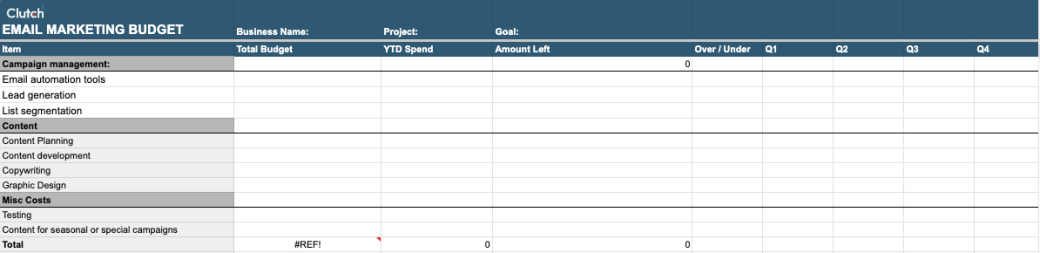
Download our email marketing budget template.
There are plenty of dynamic variables that go into play when it comes to budgeting for email marketing. To achieve the best results, you need more than content creation and tools.
Here’s a run-through of every factor that influences email marketing costs:
As you scale your email marketing efforts, be prepared to spend more on tools and testing. Be sure you consider all these components when creating your budget.
At the end of the day, businesses aren’t the only ones benefiting from email marketing — customers also love receiving discounts and promos through emails. Many people check their inboxes for potential sales, exclusive offerings, and new product launches.
At the end of the day, you don’t need to spend a ton of resources to get the best results. All you need is the right email marketing tactics, tools, and team to help you build stronger relationships with your customers.
Hire the right people that can help you achieve your goals. Work with a proven provider from Clutch’s rankings for the leading email marketing agencies. Filter the firms based on average client ratings, team size, and price to match with the perfect partner.