
How to Measure SEO Success When Traffic Declines
Organic traffic is down, but is your SEO failing? Learn which metrics show real SEO success when AI Overviews and zero-click searches are reducing clicks.
Updated March 30, 2026

The more marketers know, the better they can sell—but too much tracking breaks trust. In today’s privacy-first landscape, success in SEO and PPC depends on earning data, not just collecting it.
Marketers live off data, and customers live off trust. I call it the marketer’s paradox. The more you know about your audience, the better you can sell. At the same time, when you collect too much user data, you risk violating user privacy, which is one of the quickest ways to tank your marketing strategy.
Consider this. You walk into your favorite coffee shop, and before you order, the barista shouts, “A vanilla latte to go.” They already know what you’re going to have. You don’t usually accompany it with anything, but today they suggest a croissant that goes down perfectly with the latte. Morning made, right?
Looking for a SEO agency?
Compare our list of top SEO companies near you
Now, imagine walking into a new coffee shop. Again, the barista sees you and they already know your favorite drink and the accompaniment you will love. It should feel convenient, but it comes off as creepy.
This is the tightrope marketers have to walk every day.
Understandably, many marketers don’t agree with the concept of data privacy. Their argument is, “If a website wants to show me an ad about something I’m interested in, shouldn’t I want to see it? Isn’t that better than getting ads about stuff I don’t care about?”
That’s true. In fact, users love personalization and convenience. They just don’t want it to be invasive. If my barista uses our little morning conversations to build a list of my preferences, that’s good customer service. However, if they start following me to other stores and stalking me at work to determine my preferences, that becomes a problem.
That’s how consumers view third-party tracking.
Still, it’s not a strong enough reason for all the stringent privacy regulations. Consumers already have tools like privacy browsers and ad blockers to help fight targeted ads.
I’m guessing you’re already aware of the Facebook Cambridge Analytica scandal and how user data was used to influence elections.
Here’s another one. In 2020, the US military was found to be using data from a Muslim prayer app and a dating app to track the movement of users. There’s also a reported case of police using social media activity data to track protesters’ movements.
These are just a few examples of seemingly harmless data being abused in ways that put innocent users at risk. Now, add the increasing cases of data breaches, and you will start to see the picture.
Companies collect troves of user data they don’t necessarily need, but fail to protect it adequately. Inevitably, they get breached, exposing customers to threats such as phishing and identity theft.
Chances are, your data is already on the dark web, and you have no idea. Yes! You’re a victim, too, and need to be protected.
Unfortunately, data privacy laws have also completely changed the game for SEO and PPC marketers, hence the conflicted feelings. And the truth is, it will only get worse as more privacy laws come into effect.
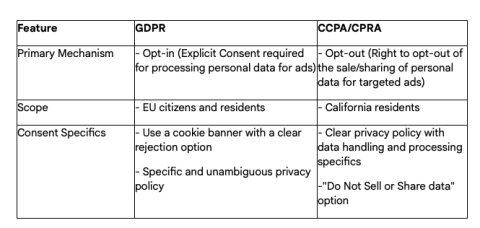
Two main laws are responsible for the shift in the data privacy landscape. The first is the General Data Protection Regulation (GDPR) enacted in 2018 to protect the personal data of EU citizens. This law applies to any business that deals with EU user data.
Key GDPR requirements that affect PPC campaigns and SEO include:
Then there’s the California Consumer Privacy Act (CCPA), also enacted in 2018 to give California residents control over their data.
According to the CCPA, consumers have:
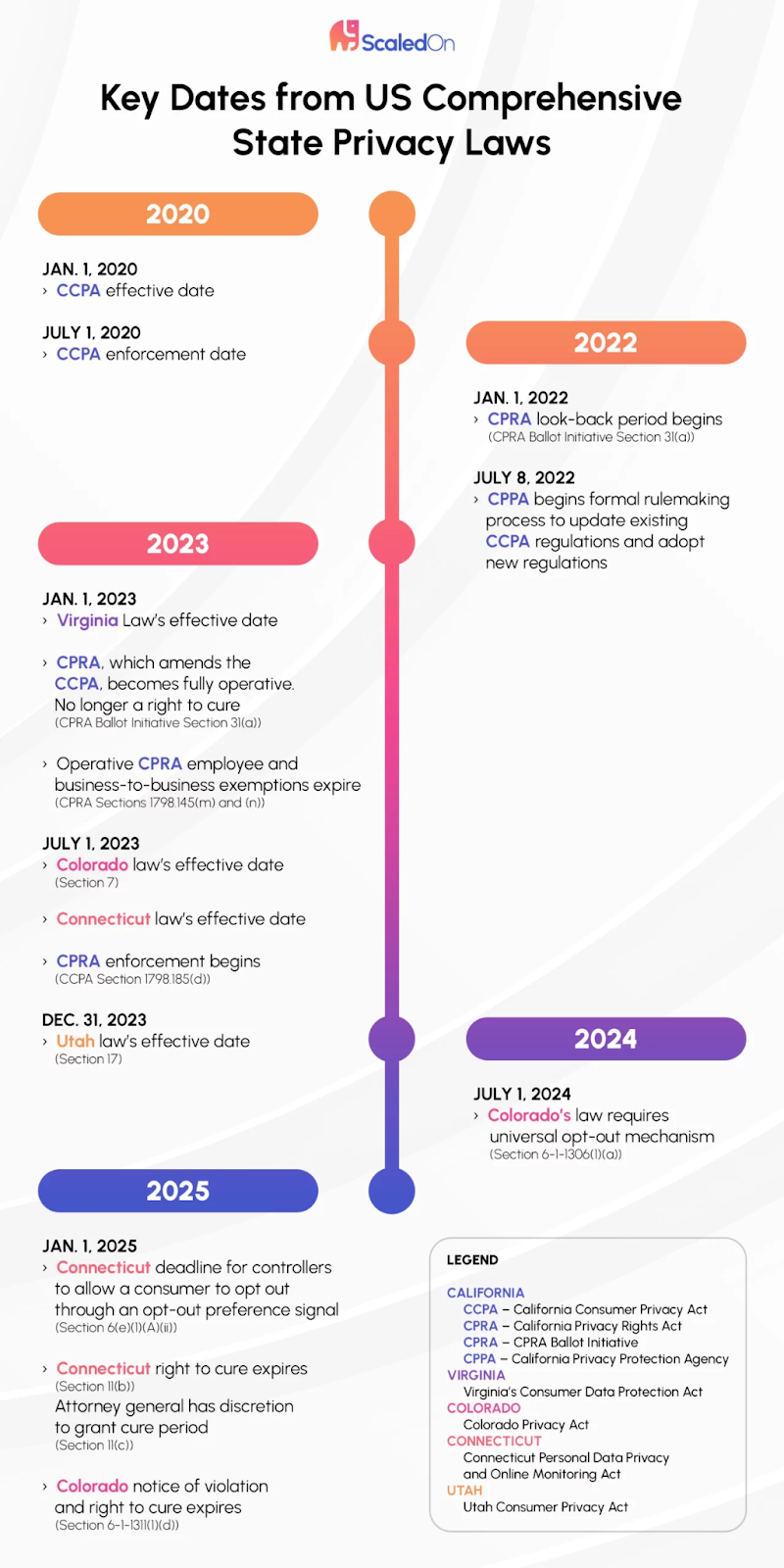
Multiple other US states have also passed their own laws in recent years, or are currently drafting one.
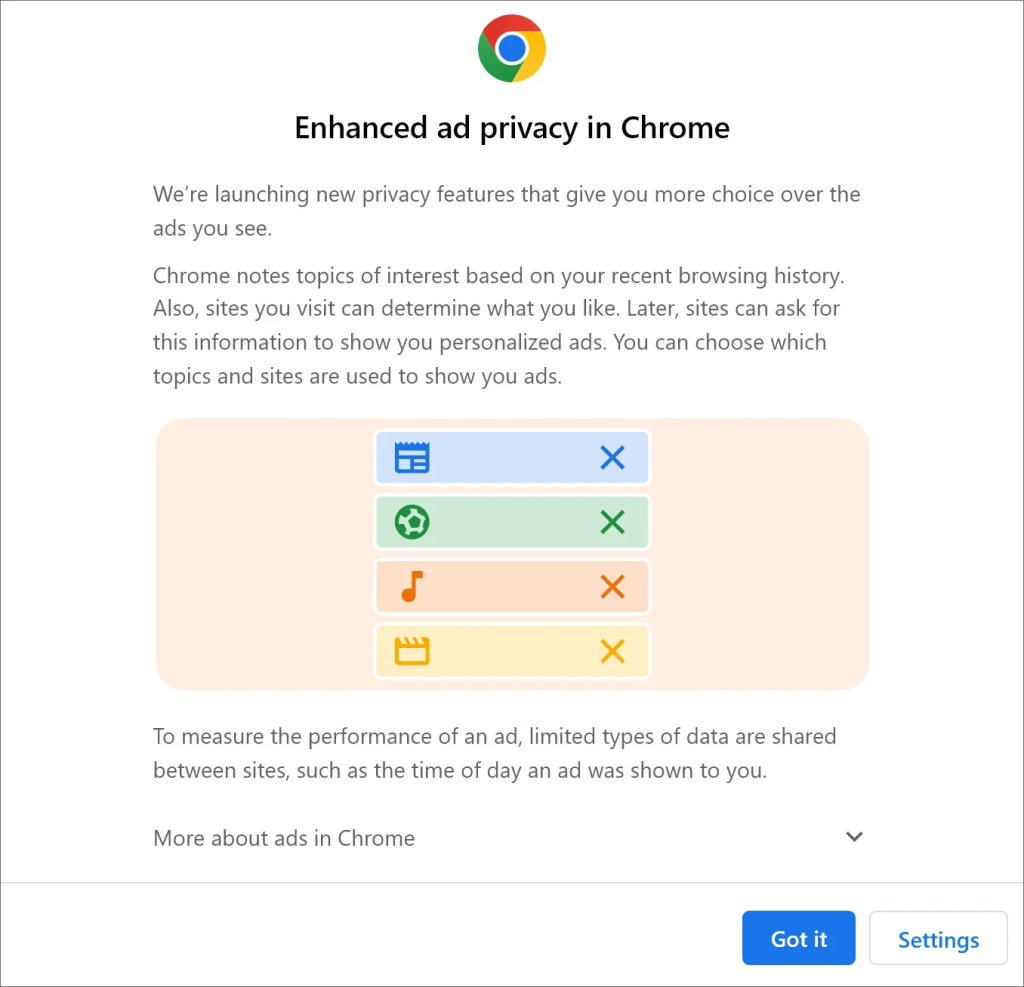
While the implications of data privacy laws on individual websites cannot be overlooked, their effect on big tech (the major facilitators of the data economy) has affected digital marketers the most.
To stay compliant and avoid fines, these companies have had to make some changes to their policies.
Together, these changes mark a clear shift toward a privacy-centric digital landscape—one where marketers must adapt their strategies or risk falling behind.
As privacy regulations tighten and tech giants respond to mounting legal and public pressure, marketers have had to contend with a new reality: they don’t have the same data leverage for their SEO and PPC campaigns.
Google’s move to make HTTPS a ranking factor back in 2014 was one of the earliest signals of the privacy-first pivot.
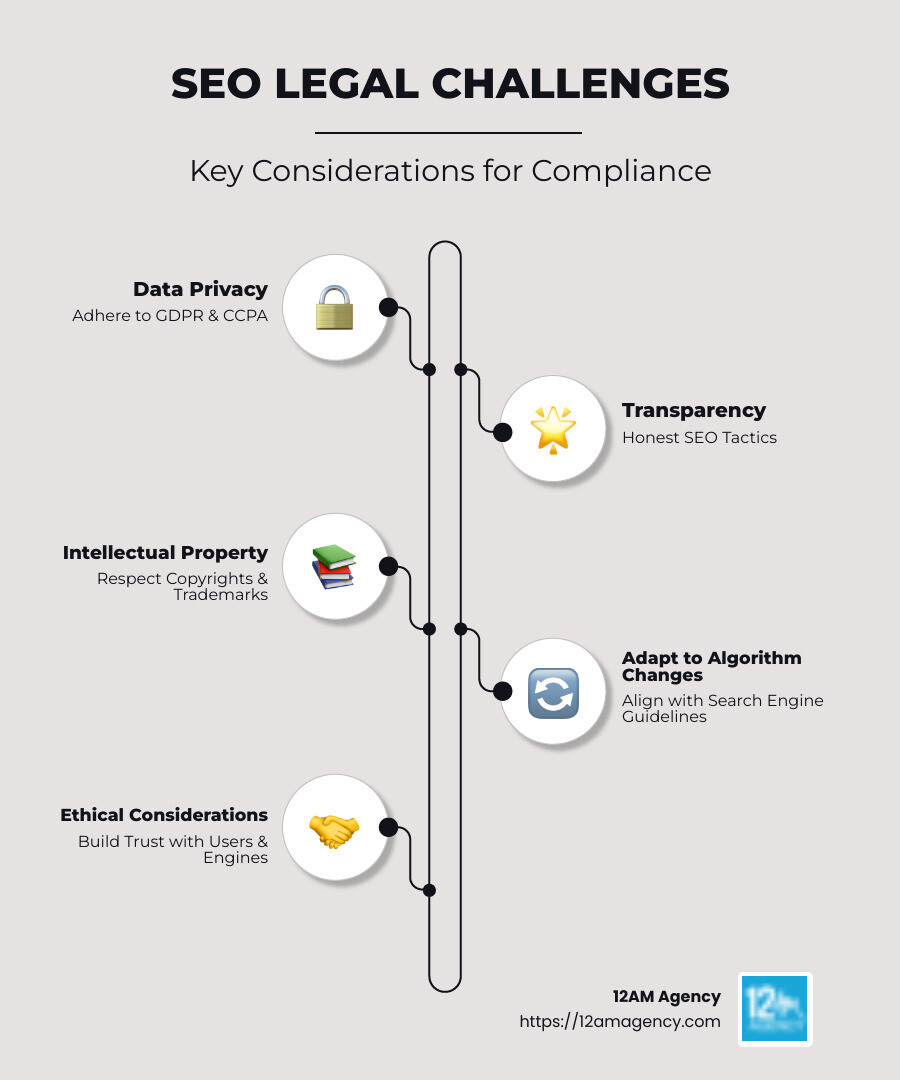
Here are other ways the shift has changed the SEO game:
Harder to analyze organic traffic patterns - You can’t just pop into Google Analytics and see the keywords driving traffic to your website. Not with Google masking and anonymizing data to comply with set regulations. And that’s before you add the increased use of privacy-focused browsers like DuckDuckGo, where tracking is limited or non-existent.
Consequently, it’s harder for marketers to attribute success to specific SEO campaigns. Even SEO tools like Ahrefs and Semrush suffer from fragmented and under-reported data.
In short, the privacy shift has made SEO less of a science and more of an art, demanding creativity, adaptability, and a deeper focus on delivering real value to users.
Just like with SEO, the rise of privacy-first policies and regulations has reshaped how marketers approach pay-per-click advertising. From targeting and attribution to retargeting and audience building, the traditional rules of PPC no longer apply.
Incorrect attribution - Before the stringent data privacy regulations, marketers could easily map out a detailed digital customer journey across devices and platforms. Now, if a user clicks your ad on mobile, researches the product on desktop, and then converts through a direct visit to your website, the PPC platform may only record a part of the journey, if any at all.
This attribution gap can affect decision-making. Marketers may pause high-performing ads or underinvest in less-performing campaigns simply because conversions are not properly credited.
This now brings us to the million-dollar question (literally). Is there a way to still ensure the success of your campaigns without violating user privacy?
That’s how the saying goes, right? If you’re in the US, you may have encountered demand generation tools that try to exploit the lack of a comprehensive GDPR-style regulation. This is what we’re calling black-hat tactics.
A good example is RB2B, which is marketed as inbound-led outbound marketing. If that doesn’t make sense, it will when you hear how the tool works. RB2B helps businesses identify the LinkedIn profiles and email addresses of website visitors.
That’s not the worst part. The visitors have no idea this is happening because there’s no consent involved. The tool will work whether the website has a cookie banner or not. There’s also no option to opt out of tracking, and the company doesn’t push for disclosure through privacy policies.
The tool caused a storm on LinkedIn when it was introduced, eventually culminating in a public debate between the founder and Clark Barron, a cybersecurity marketer and a data privacy champion.
Point to remember, black hat tactics may provide you with quick leads, but they come at the cost of your reputation. Or as Clark bluntly puts it, “It’s an incredibly short-term, myopic way of thinking that’s not going to build a long-term sustainable brand.”
Rather than engage in practices that will ruin your brand name and any potential for long-term success, here are some best practices to ensure PPC success while remaining compliant:
Marketers should pivot to data collected directly from prospects through methods such as email lists, loyalty programs, and interactive content like surveys and polls. For a successful campaign, you should also remember to verify email addresses before reaching out.
While it takes more effort to build and scale first-party data strategies, the long-term payoff in trust, compliance, and campaign performance is well worth it.
Instead of targeting users based on behavior, which relies on invasive tracking, show ads based on the content of a page. For instance, you can place ads for supplements on a health and wellness site. Today, you can even use AI and natural language processing tools to analyze page sentiment, tone, and intent to place ads in highly relevant contexts.
Contextual advertising may not offer laser precision, but it strikes a healthy balance between relevance and respect for user privacy.
Instead of tracking users through their browsers (client-side), you can collect the data from an appropriate server on your end (say Google Tag Manager Server-Side), then send the data to the analytics and ad platform.
For teams with the technical chops, server-side analytics offers a powerful way to preserve user privacy without sacrificing campaign insights.
Create Slack groups, Discord servers, Facebook groups, or host a webinar to bring people together in private forums detached from conventional ad platforms.
This kind of direct engagement is one of the most effective ways to find leads without relying on third-party tracking. People joining your community are warm leads who are more open to hearing about your product or service than a random stranger who accidentally clicked on your ad.
While it takes time and effort to nurture, building your own community gives you a sustainable edge that no ad algorithm can replicate.
You're on a sinking ship if you’re still clinging to the old tactics. Realize that the customer journey is no longer linear. Also, the most value in your pipeline is not the faceless personas you’ve built off third parties, it’s the real people who have learned to trust your brand because of the value you provide.
Marketers of the future are the ones who sell without being salesy. To achieve this, you’ll need a deep understanding of your audience gained through direct and authentic connections. This is why first-party data is your best asset. It’s also why contextual advertising works. The reader is already in a mindframe where they’re actively interested in your solution - it doesn’t feel invasive.
On a more advanced level, you can employ server-side analytics, giving you better control of the data you collect. Then, of course, there’s AI. Whether you’re collecting actionable insights from first-party data, determining relevant context for your ads, or even crafting content for ads and SEO, AI will come in handy.