
How to Choose a 3PL: 5 Mistakes E-Commerce Brands Make
Learn how to choose a 3PL that fits your channel mix, avoids hidden costs, and scales with your brand. Real selection criteria, and top providers compared.
Updated May 28, 2026

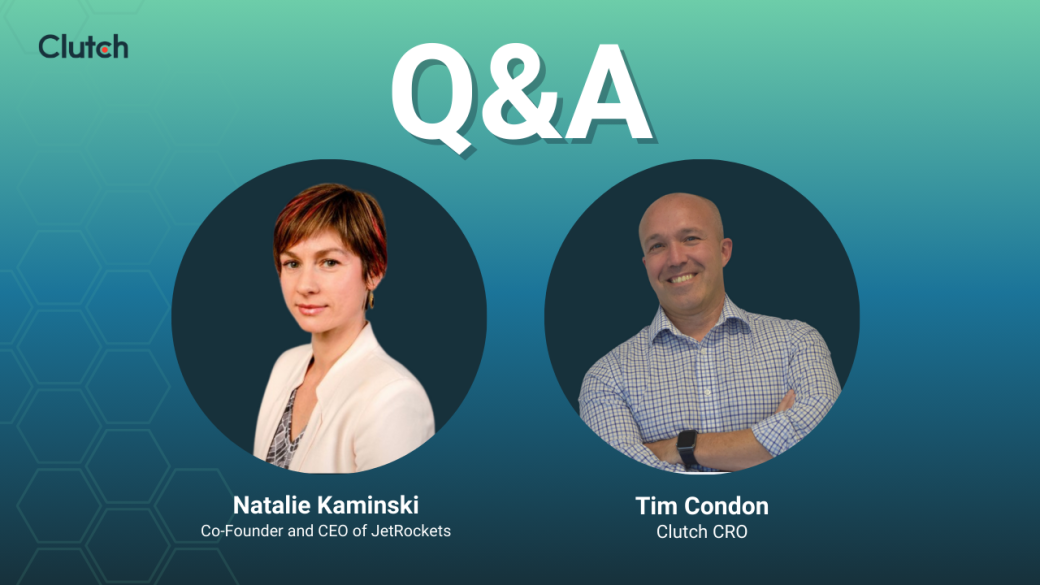
In this interview, Natalie Kaminski, CEO of JetRockets, will dive into her approach to expanding service offerings in ways that align with both client demand and business growth. She’ll discuss the importance of continuously gathering client feedback and monitoring market trends to ensure services remain relevant and competitive.
Looking for a BPO agency?
Compare our list of top BPO companies near you
In this video, you’ll learn:
Natalie, tell the audience a little about yourself and Jet Rockets.
Natalie Kaminski [00:40-02:24]: JetRockets is a software development company specializing in working with non-tech founders to launch their tech platforms. Many companies avoid this niche because it can be challenging, but we've made it our expertise. Over the years, we've developed what I call a 'good bedside manner' - similar to what you'd want from a doctor.
We've built our approach around working with people from non-technical backgrounds who may not understand the terminology or complexity. We don't just deliver products; we educate our clients throughout the process. This means our clients gain both a platform and the knowledge needed to succeed in the tech world they're entering. Technically, we specialize in Ruby on Rails and have been working with it for over 15 years. Our client base includes both startups and enterprise clients who need Ruby on Rails expertise to scale and improve their products.
So we're talking about expanding service offerings within a company, and I have this conversation with clients a lot. Some have told me they let their existing clients pull them into new services, which allows them to grow more organically. But others completely disagree and feel that if you don't proactively manage what you offer, you're bound to get yourself in trouble. Where do you sit on that question?
Natalie Kaminski [02:25-05:52]: Success requires balancing market trends and client feedback. At Jet Rockets, we're committed to delivering above and beyond, while staying competitive in the broader market by monitoring trends and new technologies. While we listen to our clients, we maintain a strong core identity. For example, we don't work with WordPress, even when existing clients request it. However, when clients express interest in emerging technologies like AI, we're eager to explore these opportunities. The key is knowing when to adapt and when to stay focused on your strengths.
How do you balance client requests for new services with maintaining quality in your core offerings? What's the framework you use to evaluate whether a new service truly complements your existing offerings?
Natalie Kaminski [05:53-8:00]: When we first started around 2009-2010, we took on any project from anyone willing to pay - that's valid when you're finding your footing. You need to explore different paths to discover what you're good at and passionate about, because you can't excel just by chasing money. We tried everything initially, including WordPress, which taught us what we didn't want to do. While we still work across various industries - healthcare, real estate, fintech - that's a conscious choice. We love learning about different verticals. However, we did narrow our tech stack specifically to Ruby on Rails. Not only are we passionate about it, but we're extremely good at it. Having weathered its challenges, we're now seeing its renaissance. Success comes down to finding what you love, what you're great at, and where you can make an impact.
Building on this, it’s easy to get caught up in the hype of a new service or technology. We're seeing a lot of agencies chase market trends without proper foundation. How do you distinguish between a genuine market opportunity and a temporary buzz when evaluating new service areas?
Natalie Kaminski [08:01-10:51]: We never fully jumped on trends like blockchain. While we've done projects involving blockchain and AI, we view them as tools, not silver bullets. It's almost amusing when people market everything as 'AI-driven' now - it's like saying you're using electricity or the internet. We've actually been building machine learning and AI-based products before they became buzzwords. It's similar to how 'big data' and data warehousing have been around for 30 years. The key is differentiating between a fad, a rebranded existing technology, or something truly revolutionary. Today, we suggest AI capabilities to existing clients because it's more accessible and can enhance their platforms. But we're not dropping our core focus to chase AI exclusively - it's just another utility in our toolkit.
But we're not dropping our core focus to chase AI exclusively - it's just another utility in our toolkit.
Let's talk about the feedback loop. What's your process for gathering and actually implementing client input into service development?
Natalie Kaminski [10:52-14:14]: At JetRockets, we emphasize long-term client relationships over one-off projects. Most of our clients stay with us for years because we become their go-to product development team. Each project has a dedicated manager who wears multiple hats - project manager, product manager, and account manager. They deeply understand the client's business and product, looking for opportunities to add value beyond basic execution. For instance, we might suggest features based on user demographics and behavior patterns. This approach led us to realize we were effectively serving as fractional CTOs for our non-tech founders - helping with investor meetings, long-term budgets, and strategic planning. This insight evolved into a standalone service offering, demonstrating how our client relationships drive new business opportunities.
Looking back at Jet Rockets' growth journey, what's one service expansion you're particularly proud of?
Natalie Kaminski [14:15-16:54]: We've found great success with two key service expansions. First, our fractional CTO service opens new doors and allows potential clients to 'try us out' before committing to full product development. Being in a unique position of having launched hundreds of platforms, we bring collective knowledge that surpasses what a single CTO might offer. Second, our technical audit service, which started with our own clients, has evolved to serve venture capital and private equity firms. While these firms excel at financial due diligence, they often overlook technical assessment. We help them avoid investing in platforms that aren't scalable. Both services emerged naturally from our core business, creating win-win situations where we can leverage our experience while providing valuable insights to different market segments.
What's one where you learned a valuable lesson about scaling a business?
Natalie Kaminski [16:55-19:47]: About 6-7 years ago, we attempted to expand into native iOS and Android development. While we hired developers for both platforms, we lacked the leadership expertise to properly oversee them. Our CTO's experience was in other areas, so we couldn't effectively evaluate their work or progress. Today, we stick to hybrid platforms using React Native, having learned that we shouldn't expand into areas where we can't provide strong technical leadership and quality control. We've made a firm decision to only take on work that our leadership team can fully oversee and guarantee. If something needs fixing, we need to be able to handle it in-house without outside help.
Anything you are really looking forward to as we wrap up 2024, and looking to 2025?
Natalie Kaminski [19:48-20:45]: Recently we added product design as a standalone service. While we previously had junior designers ensuring basic aesthetics, hiring a strong lead designer showed us the potential for design-only projects. Though it's new territory for us, we're learning a lot from these engagements.
What’s your go-to podcast?
Natalie Kaminski [20:48-20:54]: My First Million podcast.
One thing that people who don’t know you well would be surprised to learn about you?
Natalie Kaminski [20:55-21:11]: I still struggle with imposter syndrome 20+ years into my career.
What’s the most memorable moment for you in your professional career so far?
Natalie Kaminski [21:12-21:44]: When the war broke out between Russia and Ukraine, we relocated most of our developers from Russia, Belarus, and Ukraine to Georgia. What stands out most was the incredible loyalty and support we received from our clients during this time.

Natalie Kaminski, CEO of JetRockets, is a tech entrepreneur with a knack for bridging the gap between non-tech founders and the digital world. With a journey spanning multiple countries and roles—from programmer to COO—she brings a wealth of hands-on experience in turning tech ideas into reality. At JetRockets, she leads a global team that specializes in helping non-tech businesses launch successful tech platforms, ensuring they're well-built, user-friendly, and perfectly aligned with business goals. Natalie's passion is guiding founders through the intricacies of the tech landscape, from ideation to launch and beyond.
Interviewed by: Tim Condon, Chief Revenue Officer at Clutch