
How App Companies Can Build Trust with Customers
Learn how app companies can build customer trust through better privacy practices, transparent communication, and stronger security to improve retention and...
Updated December 18, 2024

The edtech market is experiencing a surge of new solutions, helping formal institutions digitize their programs and informal learners gain new skills more engagingly.
When building a learning app, it’s vital to follow the trends—such as personalization or gamification—and discover how existing apps attract users’ attention.
The niche of online learning has been steadily growing for years, and the COVID-19 pandemic pushed it even further. In the first quarter of 2020, education apps received a spike in downloads, increasing to 940 million.
Looking for a Mobile App Development agency?
Compare our list of top Mobile App Development companies near you
The market for e-learning solutions continues to grow and is expected to hit over $7 billion by 2025. A lot of organizations need educational products, and many companies are willing to develop them. Still, it’s important for both parties to follow the industry trends and understand the mechanics of edtech that are proven to work well.
This article will review current trends in learning app development: how these products are helpful to users, what functions are an absolute must, and what are the best practices to follow.
Web or mobile applications represent a more flexible and interactive way to learn to end users. They give access to a broader range of educational content, save users time and money, and can greatly boost motivation.
But how beneficial are education apps to organizations thinking of developing them?
Additional Reading: '5 Online Education Trends'
Research shows that up to 40% of teachers’ hours are spent on activities that can be automated.
Thanks to advanced technologies implemented in web and mobile apps, individual teachers and educational organizations can save time on administrative tasks, task evaluation, and other operations.
By eliminating routine tasks, companies can improve cost distribution and have more room for high-level, strategic activities.
Digital learning has no borders and allows to engage users in any location and at any time. People can choose their way of interacting with educational materials and do that in between daily tasks or on the go.
If companies choose to develop a custom solution instead of white-labeling or adopting ready-to-use software, they can tailor every little detail to their particular needs.
Plus, a custom education app is able to be expanded with more features any time a new demand rises.
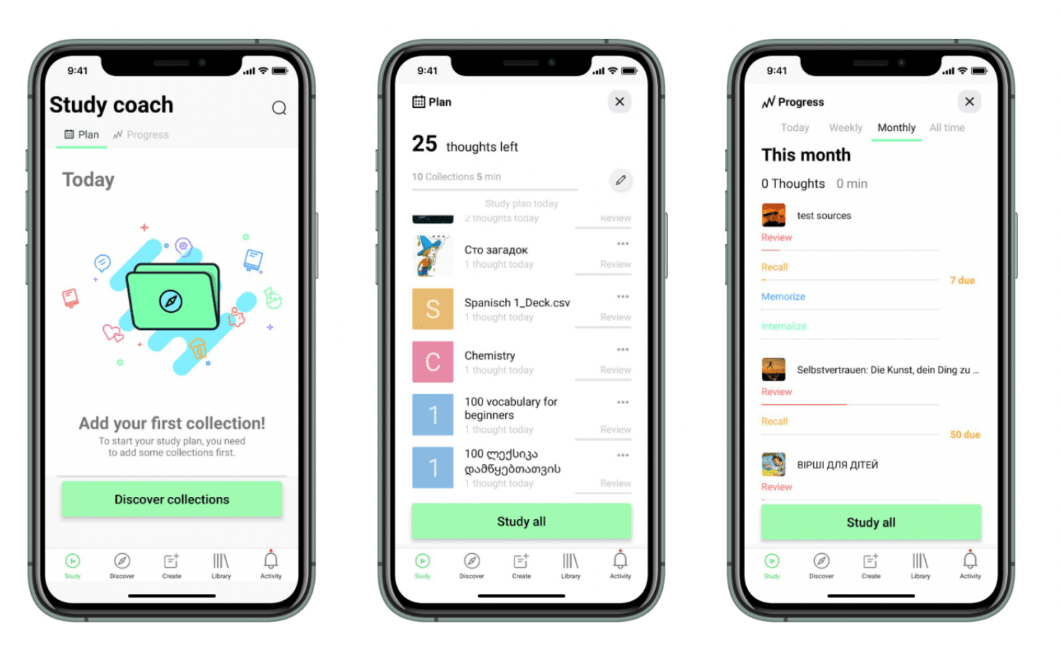
Above is a general view of a learning app developed by TRIARE.
Now as we know how learning apps can benefit companies related to education, let’s see what are the major features such apps should incorporate.
Educational content featured in the app will largely depend on the needs of an organization: it can be a large database of courses any teacher can contribute to or a specific set of materials tailored to a narrow demand. In any case, an edtech solution should include the following:
A learning app should provide multiple login options, including social media ones. The ability to log in via Facebook or Google account instead of creating new credentials has become the norm in apps of different inductions. For iOS products, it also makes sense to incorporate Apple ID login.
The gamification trend defines the industry of e-learning: for instance, it’s been discovered that challenge-based mechanics increases learners’ performance by over 30%. A web and mobile app should feature a reward system, friendly competitions, progress badges, and other game-like elements to make the process more interactive and fun.
Increasingly, more users are learning something online, but at the same time, users have less and less time to dedicate to each learning session. This is why an edtech product should divide its content into digestible parts and always offer an easy way to continue where a user has left off.
AI is not just a buzzword in the world of education: teaching neural networks to understand user patterns leads to more personalized programs that adjust to each person’s speed of learning, preferences, and end goals. Plus, an educational app can utilize AI in chatbot assistants, voice recognition, dynamic translations, and other useful features.
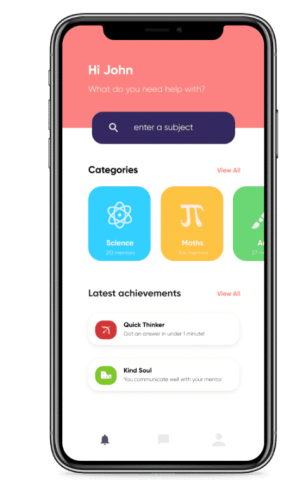
Above is an example of personalization in an online mentor app developed by TRIARE.
Augmented and virtual reality technologies are also entering the industry. AR/VR tools are great for engaging users by including them in a virtual learning experience.
Apps created for institutions should be able to handle high user traffic and guarantee stable performance. Virtual classroom functionalities involve integrations with microphone and camera, the possibility to share screen, etc.
Digital learning tools shouldn’t interrupt users when their internet connection is lost. It’s essential to synchronize data in real time and let users continue when they’re offline. If some features aren’t available in the offline mode, an app should anyway keep the user’s progress.
An app meant for learning should incentivize users by sending them reminders about unfinished tasks, newly available content, daily or weekly challenges, friends’ activity, etc.
Although each project is unique, we noticed that most of the features repeat. It’s a go-to strategy when you build your own educational app. We recommend making an emphasis on discovery to understand the user journey and picking only necessary features.
Some learning apps have already set the bar in how to attract users and keep them engaged. Here are a few examples:
Below is a screenshot of the Photomath app designed by NVIDIA.

The apps we’ve mentioned are attracting millions of downloads thanks to getting the demand right and providing users with the learning experience they need: simple, fun, and immersive.
The landscape of both informal learning and institutional education is being shifted toward digitalization. Increasingly more people, especially since the pandemic, require web and mobile apps to gain knowledge in a flexible and convenient way. There are over 500,000 educational apps already, but we can expect more to come.
If you’re thinking about building an education solution, research the market and trust a development provider that has expertise in the field. It’s important not to reinvent the wheel but follow the best practices that are proven to be successful.
E-learning apps should be easy to navigate from the very moment a user opens one, make the learning process engaging and divided into digestible parts, and give friendly nudges so that users are motivated to continue.
Hire a mobile app development company to build your education app.
Additional Reading: