Lead Quality vs. Lead Quantity: Why B2B Teams Are Rethinking Their Funnel in 2026
Bigger buying committees and tighter budgets are forcing B2B teams to rethink lead quality vs. quantity. Here's how top teams rebalance the tradeoff in 2026.
Updated May 26, 2026

Conversational marketing helps B2B sellers meet leads where they are in real-time. Learn how to implement it with step-by-step instructions to drive more sales.
The B2B buying process is changing. In the past, static forms and delayed responses were enough to attract new buyers. But as more companies invest in real-time marketing capabilities, these old methods feel increasingly slow and non-personalized. If they’re all your business offers, you could miss out on leads who look elsewhere for more instantaneous answers.
That’s what makes conversational marketing worth your attention.
Looking for a Digital Marketing agency?
Compare our list of top Digital Marketing companies near you
Robyn Lee, head of client success at Signa Marketing, defines it as “meet[ing] people where they are, online, in real-time, and on their terms.”
Brands do this through live chat support, AI agents, and conversational email, among other channels.
Keep reading to learn why your company may want to embrace a similar strategy.
Conversational marketing shifts the selling process from one-way information-sharing to a two-way dialogue. It uses real-time conversations to create a more interactive and personalized experience for the prospect. This helps them get the information they need instantly instead of waiting days for back-and-forth exchanges.
Traditional B2B marketing often relies on static blog posts, forms, and email drip campaigns. These can still work today, but they’re not a good fit for highly motivated buyers looking for answers now. Conversational marketing is dynamic, personally relevant, and a better experience for this segment of your audience.
However, Andy Groller, president and CEO of Dragon360, reminds us that “Conversational marketing is only as good as the conversation itself.”
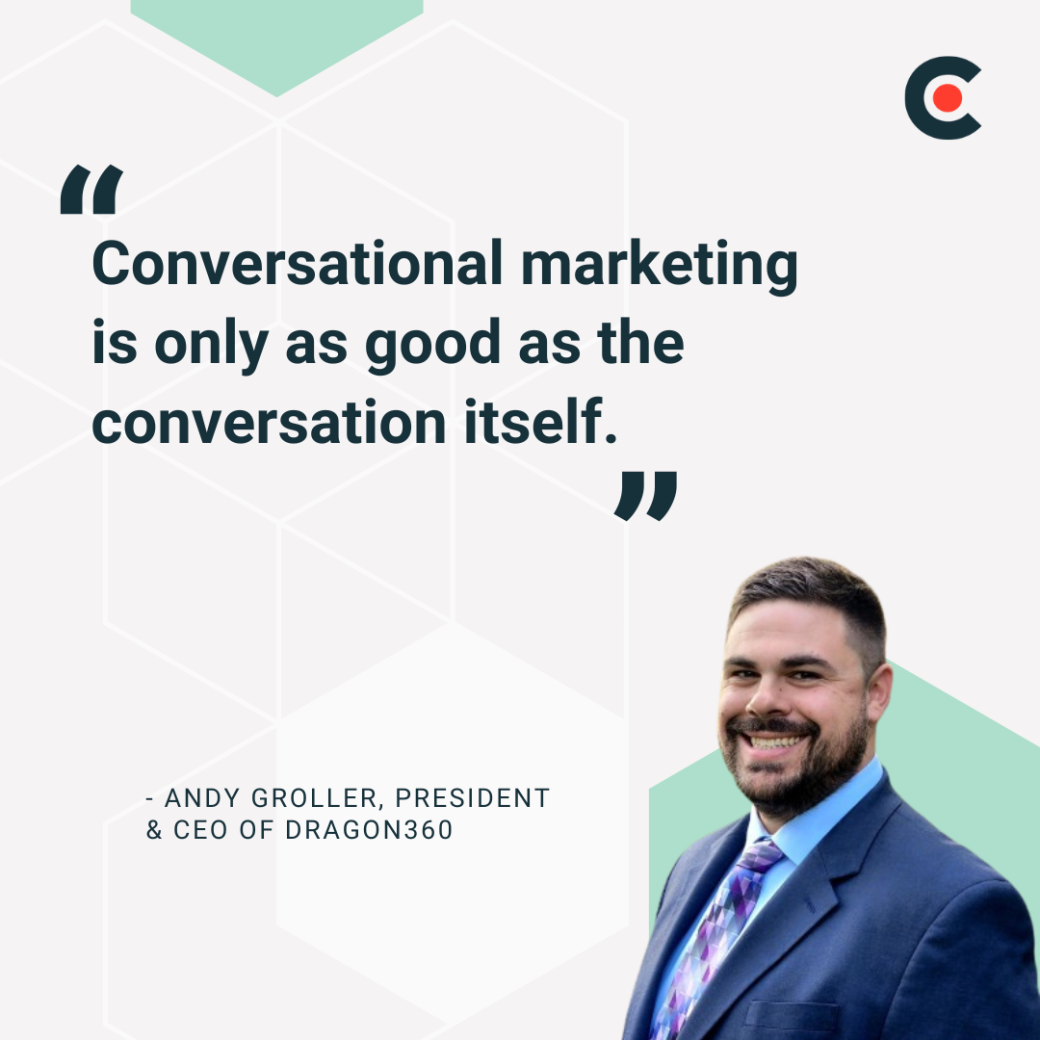
In other words, to maximize performance, you’ll need the right approach for your business and its unique buyers.
Companies of all sizes and goals use conversational marketing to connect with buyers. But the practice can be particularly valuable in the B2B space.
Here’s why:
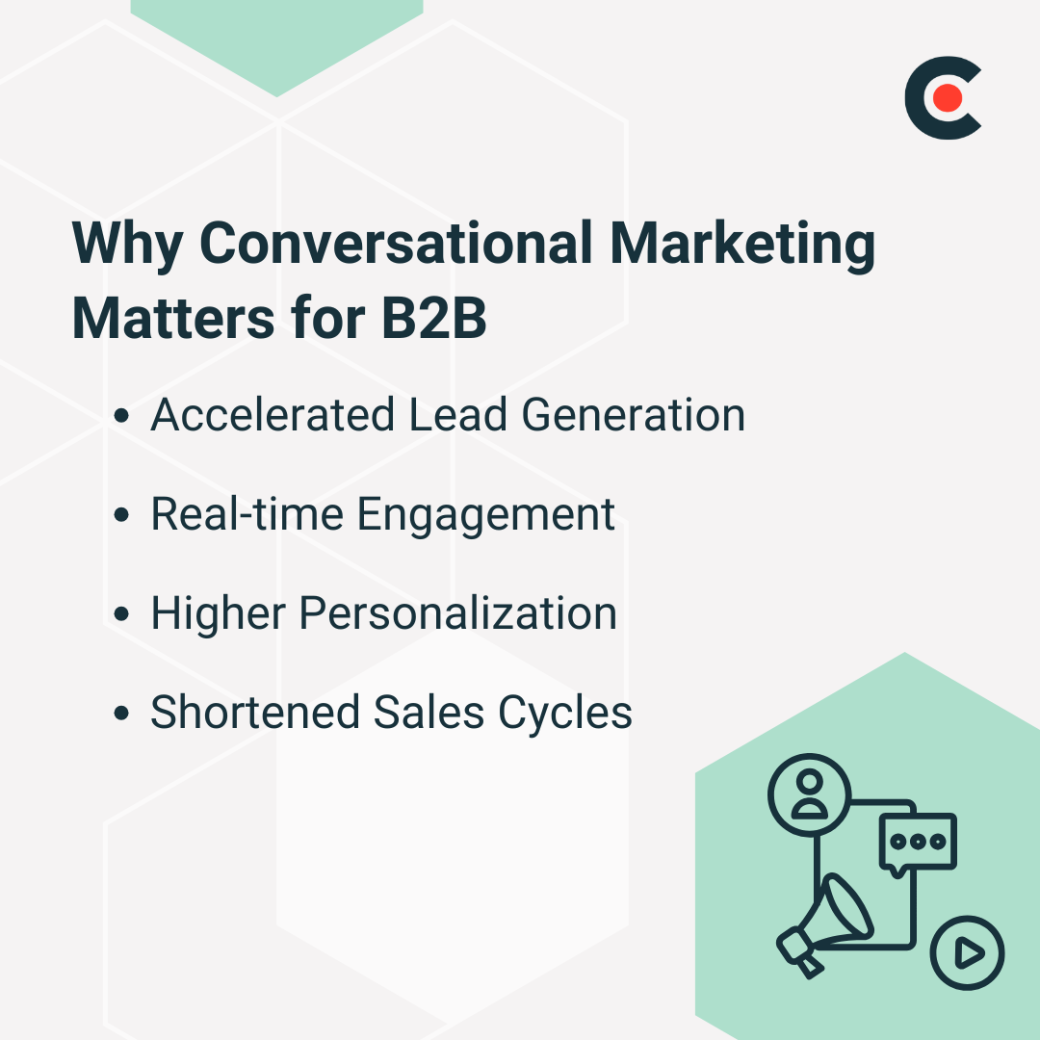
All of these can benefit your customers in some way.
If conversational marketing seems like a good fit for your business, the next step is researching commonly used channels. These four are the most important.
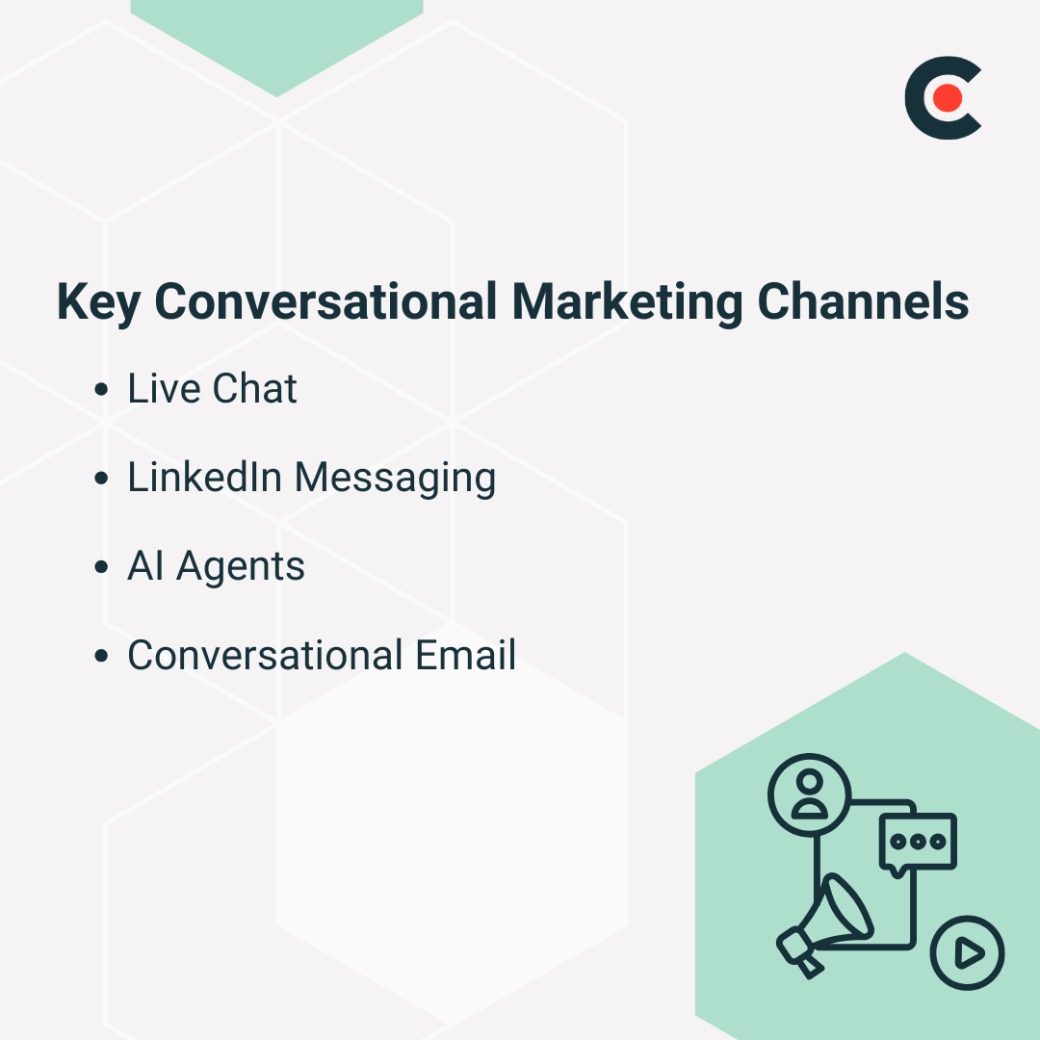
First, many companies offer live chat assistance on their websites. This is a good tool for answering frequent product questions, guiding visitors through features, and booking demos instantaneously.
Some companies only offer live chat support from AI agents. Others supplement instant AI answers with optional support from real humans. You’ll have to decide what’s best for your brand based on its budget and goals.
LinkedIn could be another channel worth your investment. It’s a way to engage with your target audience in a more personalized way. Instead of reaching out with a company profile, you can connect with leads through individual employee accounts. This makes prospects feel like they’re speaking to an actual person, making them more likely to continue engaging.
AI chatbots may be the most common form of conversational marketing today. They’re great for processing initial inquiries, answering questions after-hours, and driving leads deeper into your sales funnel.
Just make sure to back up your AI agents with support from real humans. You don’t want to provide instant answers to basic questions, but then make your prospects wait for the personalized help they really want.
Finally, you can also leverage conversational email to engage with more leads. This means using AI to tailor emails for more personalized engagement. For example, you might send a different welcome email based on a new user’s industry, recent activities, or previous questions.
You can leverage AI to answer follow-up emails instantly, spark conversations that help your sales team, and improve the general customer experience. Some users prefer to engage via email. Offering conversational support on that channel will help your business connect with this audience segment more effectively.
Now that you know how conversational marketing works, it’s time to design a strategy for your business. These step-by-step instructions provide a framework you can follow to make it happen.
Start by being explicit about your goals. For example, do you want to drive more demo bookings or shorten your sales cycle? You might also be interested in decreasing your cost per conversion or speeding up average response times.
There are many goals that you can pursue through a conversational marketing strategy. The important thing is defining what you’re trying to achieve early in the process, so you have an objective way to track your performance. For example, if you want to shorten your sales cycle, you’d compare average timelines before and after updating your conversational marketing strategy.
Next, consider your target audience. To design a strategy that delivers value to them, you’ll need to know what they care about and how they like to engage with your company. This can change across channels.
For example, prospects you engage through email conversational marketing may have different goals than leads you connect with on your website. Don’t worry if your approach is relatively undifferentiated for now. You’ll gather data once your conversational marketing strategy goes live and can adapt as needed.
As you work, focus on building personas that drive trust. David Ebner, president of Content Workshop, says, “Trust is built person-to-person, and conversational marketing is another avenue to develop those relationships.” So, take advantage of it!
The next step is finding the tools to facilitate your vision for conversational marketing. That may mean investing in:
While researching, make sure each tool fits into your existing tech stack. Integrations enable you to use data across platforms to drive deeper insights into your target audience. You’ll learn less if the tools you choose can’t feed data back into your sales and marketing platforms.
Now you’re ready to map out the conversations leads will have with your AI tools. This means:
Iulia Vasciuc, CEO of ScaledOn, says the real magic happens when brands combine instant answers with personalized content: “The customer gets the speed and convenience of automation — answers now, 24/7 — without sacrificing the feeling of being understood and treated as an individual.”
Additional Reading: ‘7 Everyday Ways Generative AI for Marketing Supports Small Teams’
You’ll also need to connect your new conversational marketing strategies to existing customer engagement processes. That means making sure sales and customer-facing teams:
This alignment ensures that all your customer engagement efforts work together to drive value back to the company. You don’t want humans and AI working in silos, where insights gleaned in one group never benefit the other.
Finally, create a system for measuring your conversational marketing performance. Think back to your initial goals when deciding which KPIs to track. Or, measure the following common ones:
Not all of these metrics will fit your business, but they are a good starting point.
Let’s wrap up with some best practices and common mistakes to avoid, starting with the steps you should take:
Along with best practices, there are some common mistakes to avoid with conversational marketing.
You can get more value out of conversational marketing by avoiding some of the most common mistakes teams make. Here are four to keep in mind as you build your strategy:
Keep both mistakes and best practices in mind when putting together your team’s conversational marketing strategy.
We’re moving into a world where B2B buyers expect personalized answers whenever they request them. Conversational marketing tools can help your brand stand out in this changing landscape. But to get the most out of your investments, you’ll need a custom approach designed around your target audience.
Combine your automation efforts with the empathy and individualization of real human interactions. Doing so will help your business form more real-time buyer connections and drive new conversions.