
How to Measure SEO Success When Traffic Declines
Organic traffic is down, but is your SEO failing? Learn which metrics show real SEO success when AI Overviews and zero-click searches are reducing clicks.
Updated April 24, 2026

Both Google and Amazon work on search engines, and even though those engines are built the same way, they run on different fuel. This article will explain why a single SEO strategy cannot work across both platforms, and how to adapt your approach to drive clicks, sales, and results.
As an SEO strategist, you most likely bounce between different platforms, if not on a daily basis, then at least when checking weekly reports. And if you’ve ever tried to apply the same SEO strategy to different platforms, you must have encountered performance issues. Let us take Google and Amazon SEO strategy, for example: what works on Google doesn’t always work on Amazon, and vice versa.
That is mainly because users of both platforms behave differently and have different search intents. Understanding how to utilize Amazon keyword analysis effectively is essential to improving your product's visibility and conversion rates. This article will walk readers through specifics of shoppers' behavior on each platform, how to adapt your SEO to it, and how to implement strategies that help you win both visibility and conversions.
Looking for a SEO agency?
Compare our list of top SEO companies near you
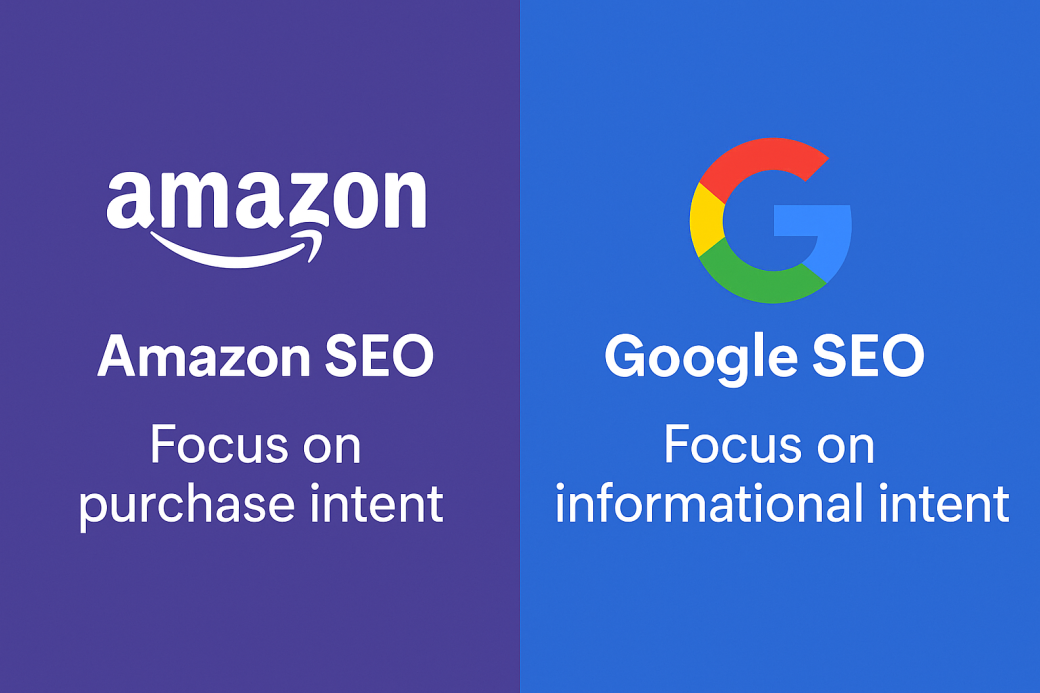
Picture Amazon as a mall. People show up because they want to buy something - they just need to choose between all the options. On the other hand, you can picture Google more like a library. People are seeking answers, researching, comparing, and learning before making a decision. People don’t go to Amazon to browse. They go to buy.
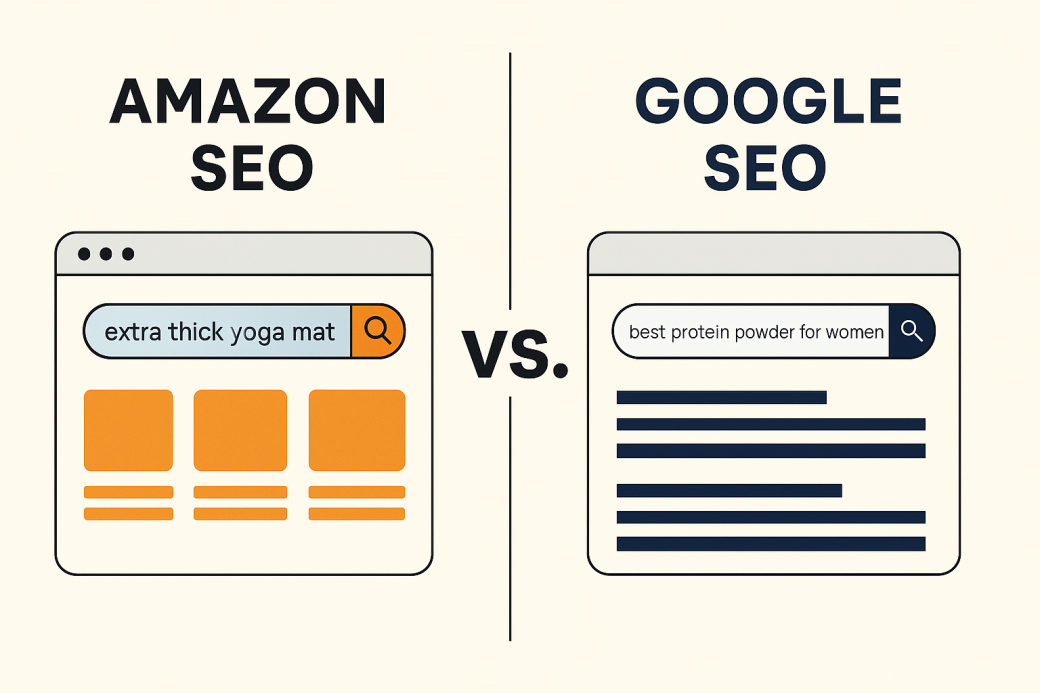
That’s why your Amazon keyword analysis should focus on the kinds of words people use when they’re ready to close the deal. For example, “refill bag” or “extra thick yoga mat,” not vague phrases like “what’s the best option.”
While a Google user might type “best protein powder for women,” an Amazon shopper will more likely search for “vegan chocolate protein powder 1kg.” That’s what buying intent looks like - and Amazon’s whole search algorithm is based on that.
If your product shows up in searches but doesn’t get clicked - or worse, gets clicks but no sales - your ranking can drop. Amazon’s algorithm watches what happens after someone sees your listing. So the point of your Amazon SEO strategy is not just to stuff in the biggest keywords you can find. You must choose those that refer to purchase intent and make your listing look like the perfect match.
Google users search deductively - they start with general searches and then narrow things down. On the other hand, Amazon users often go straight to the point. Someone on Google might search “comfortable dress for summer.” However, on Amazon, it’s: “pink, 100% cotton dress, relaxed fit, size S.”
A listing that converts on Amazon must be optimized for that level of specificity; if not, you're missing out on the buyers who are ready to shop now.
Here is a simple trick to keep your SEO organized and easily adaptable to each platform: separate your keywords into two categories - Google for awareness, and Amazon for action.
Selling a hydrating face serum?
Same product, completely different search intent behind it. Use tools like Helium 10, DataDive, or Brand Analytics to get marketplace-specific data.
Amazon is goal-oriented. Google is focused on the journey. Shoppers on Amazon want to buy now. On Google, they’re just starting their journey. You must build your complete SEO strategy on that difference, from how your ads are written to how your product pages are built.
Tailor your strategy to match the platform’s pace. Speed matters on Amazon. Patience wins on Google.
Having everything mentioned above in mind, one can come to the conclusion that SEO strategies are interconnected and, even though you must use different ones on each platform, you cannot separate them completely. You can, but that would be a waste of time and resources, since one can help you improve the other.
Your Amazon data can help you craft better Google Ads. People on Amazon type in precisely what they want, making those search terms perfect for building ads that convert. Instead of using vague phrases like “collagen benefits,” try “collagen peptides powder for joint pain and wrinkles.” That’s not just more targeted - it’s how shoppers think and act on it.
Take the exact phrases people use to search on Amazon, and build Google Ads around them. Include the product name, benefits, pain points, and details like size or type. That’s how you write a copy that clicks - because you're speaking your customer’s language, not guessing what they want.
An additional, and extremely important, bonus to this strategy is better ROI. Using real Amazon keywords doesn’t just improve your targeting - it also boosts ad relevance, lowers CPC, and helps your Google Ads Quality Score. That means your ads cost less, perform better, and convert more.
More good news? You don’t have to do it all manually and by yourself. Here are a few helpful tools:
These tools can save you from hours of guesswork and make your SEO and campaign material backed by the latest data trends.
Short-tail keywords get you exposure; long-tail keywords get you conversions.
Short-tail keywords like “wireless headphones” get tons of traffic, but they’re ultra-competitive. You might show up in searches, but you’re likely buried under ten pages of big brands. Still, they’re essential for visibility and helping Amazon understand what you're selling. So don’t ignore them, just don’t rely on them alone.
Long-tail keywords do not have as much traffic, but they are mirroring shoppers’ intent. For example, “wireless Bluetooth headphones for kids with volume limit.” These terms are deeply specific, low-competition, and highly effective. A smart Amazon keyword analysis should be focused on finding long-tail keywords that are easy to rank and followed by conversions.
Long-tail keywords do not have as much traffic, but they are mirroring shoppers’ intent. For example, “wireless Bluetooth headphones for kids with volume limit.” These terms are deeply specific, low-competition, and highly effective.
A smart Amazon keyword analysis should be focused on finding long-tail keywords that are easy to rank and followed by conversions.
The best strategy? Blend them. Short-tail puts you on the map. Long-tail gets you sales.
Here’s an example listing title:
“Yoga Mat Non-Slip | Extra Thick for Home & Studio | Eco-Friendly TPE | Strap Included”
Together, they fit the algorithm and the shopper.
Amazon is becoming more competitive every day. Keep that in mind, and transform your Amazon keyword analysis from a research task to a growth strategy.
That will help you to:
So, whether you’re updating a listing, launching a new product, or writing your next ad campaign, start with your keywords. They’ll tell you everything you need to know.