
Task Automation: How to Cut Repetitive Work
Task automation saves time, gets work done faster, and reduces errors. Learn how to automate repetitive tasks step-by-step and how to decide what to automate.
Updated October 22, 2026

AI’s role in diagnosing and treating patients may still be a few years away, but AI-powered tools are already improving the patient experience in other ways. Learn more about how artificial intelligence is transforming healthcare.
Healthcare organizations everywhere are looking to use AI in their day-to-day processes to improve patient care and streamline operations. Accenture estimates that 70% of healthcare workers’ daily tasks could be automated or reinvented using AI.
AI applications such as robotics, machine learning, chatbots, and natural language processing (NLP) models can be used to alleviate clinician shortages that have persisted since the beginning of the COVID-19 pandemic while creating better patient experiences.
Looking for a Artificial Intelligence agency?
Compare our list of top Artificial Intelligence companies near you
Learn more about how organizations from all industries are approaching AI.
AI is generating a lot of buzz in the healthcare industry for its potential impact on diagnostics and treatments. With the ability to process large datasets, AI can be used to identify patterns and detect abnormalities on a larger scale and more accurately than doctors on their own.
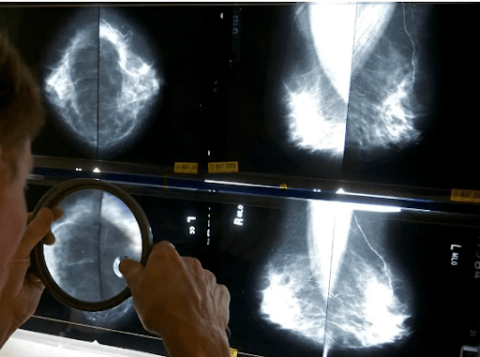
A 2022 study used AI to examine mammograms of more than 80,000 women in Sweden. Interim findings were very promising — the AI-screening process detected 20% more cancers compared to readings done by breast radiologists alone and reduced their workload by nearly half.
In areas with huge labor shortages, this can be a game-changer in ensuring patients receive the care they need. In addition to creating a more efficient screening process, diagnostics can lead to more effective treatments and better patient outcomes over time.
While these results are promising, researchers say that it’s too early to start implementing AI for diagnostics in hospitals right now. In fact, it may be years before we see it used regularly, according to Kristina Lång, an associate professor of radiology diagnostics at Lund University.
“These promising interim safety results should be used to inform new trials and program-based evaluations to address the pronounced radiologist shortage in many countries. But they are not enough on their own to confirm that AI is ready to be implemented in mammography screening,” Lang said in The Lancet Oncology Journal.
Although the use of AI for diagnosing and treating patients remains on the horizon, healthcare professionals are already using artificial intelligence to perform repetitive administrative tasks and provide a better experience for patients.
Virtual receptionists and chatbots, for instance, can be used to answer patient questions and schedule appointments. Something as simple as AI-powered patient scheduling systems and automated reminders — or purpose-built tools like Keragon AI Healthcare Agents — can reduce patient frustration and prevent no-shows, all while reducing the workload of receptionists and nurses.
“I think we'll see AI in more and more customer support roles for healthcare,” says Guy Amram, a Senior Software Engineer at Hyro.ai, an adaptive communications company that uses conversational AI and analytics to improve patient engagement and overcome staffing shortages for large healthcare clients.
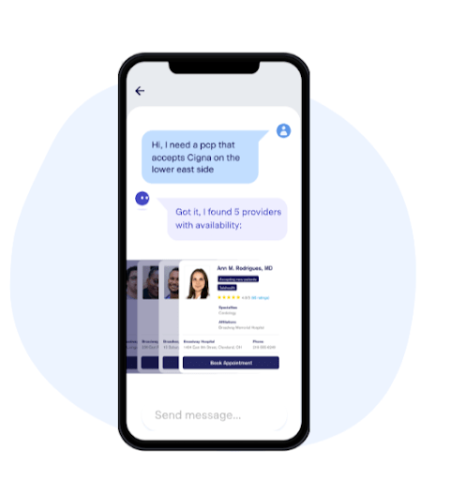
AI, along with all tools that use natural language processing (NLP), can improve accessibility for patients. NLPs use algorithms to analyze and comprehend text data, allowing computers to interpret language and generate responses in a way that is similar to how humans would.
This enables NLP-powered tools to handle patient inquiries, provide basic medical advice, and assist with appointment scheduling.
“The ability to query a program with natural language and get natural language replies will truly revolutionize many support services, but in healthcare, it really is a requirement for handling the non-stop demand from every profile of user,” argues Amram.
Chatbots, for instance, allow users to ask direct questions and receive an AI-generated response. By streamlining communications between healthcare providers and patients, AI can improve access and enhance the quality of patient care.
Wellkasa, a MedTech company that delivers nutritional supplements to treat conditions like chronic migraines, uses a generative AI customer success chatbot to answer customer questions.
Ashu Dubey, Co-Founder & CEO of Gleen, the generative AI company that built Wellkasa’s chatbot says, “The trick to developing a healthcare solution for patient success is to use the documentation of the healthcare provider to teach the LLM [large language models] how to ask and answer questions correctly and empathetically.”
While accuracy is the most important aspect of building NLP & LLM-based AI tools, it’s important to remember that creating a human-like experience is also key for patient satisfaction. Inputting large amounts of data — in this case, patient documentation — allows the LLM to ge https://www.alpacahealth.io/for-providersnerate accurate responses that are easy for patients to understand.
In addition to improving communications with patients, AI can be used to make operations more efficient. For instance, healthcare providers can use various AI tools to record patient interviews, extract information from them, and even fill out routine forms. These advances can support clinicians who want to take the next step in their careers, whether that means expanding an existing practice or deciding to start an ABA practice.
Operational changes like these can save healthcare staff significant amounts of time, allowing them to focus more on their patients. For some healthcare providers, that means being able to see more patients, while others are able to spend more time with each patient one-on-one.
AI has the potential to revolutionize the way we diagnose, monitor, and treat diseases, but it’s already changing how healthcare organizations operate. Healthcare organizations use various tools to manage scheduling, communicate with patients, and reduce the workload associated with administrative tasks.
These AI applications help healthcare providers focus more on what’s most important: their patients.
As AI capabilities continue to advance, healthcare providers and staff will be able to rely on AI-tools to provide the best possible care.
Find out how AI can help you provide better patient experiences — connect with AI services companies and industry professionals on Clutch to develop custom AI solutions for your healthcare business.