
Updated September 21, 2026
Using outsourced bookkeeping services provides your business with access to specialized services and the undivided attention of industry experts. Our hiring guide will help you hire the perfect bookkeeper for your business, from deciding which qualifications to focus on to getting tips for the interview process.
In-house bookkeeping can be time-consuming, complex, and prone to errors. From managing payroll to reconciling accounts, it can be a drain on resources. Outsourcing can speed up operations with efficiency, expertise, and cost savings. In fact, 37% of small businesses said they outsourced the work of at least one of their departments — accounting work among them — and more than half of the businesses surveyed hoped to do so soon.
The hard part is finding the right bookkeeping provider. Keep reading to learn how to hire bookkeeping services that meet your needs.
Browse Related Accounting Services
What Are Bookkeeping Services?
Bookkeeping: recording the financial ins and outs of an organization. It can also be known as accounting.
A bookkeeper is responsible for creating and maintaining all of the records that track a business’s financial health and status. This department typically covers tasks like:
- Recording transactions such as sales, purchases, payments, receipts, and more. This includes every penny spent or earned by the company.
- Sorting transactions into specific accounts — income, expenses, assets, and liabilities — so that you know exactly where the money is going.
- Reconciliation, or matching bank statements with financial records. This is the key to preventing embezzlement and fraud.
- Data entry. Traditionally, financial details were entered into spreadsheets, but now a bookkeeper is likely to use specialized accounting software.
- Generating reports and financial statements (income statements, balance sheets, cash flow statements, etc.).
Every business needs an experienced bookkeeping team to keep its finances in check. Thorough and accurate financial records ensure that the executives can make informed decisions about the organization, shareholders or potential investors can be kept informed, and the business maintains compliance with federal and state financial requirements.
Bookkeeping Services by Country
-
 United States
Bookkeeping Services
15,068 Providers
-
 Canada
Bookkeeping Services
1,616 Providers
-
 Australia
Bookkeeping Services
3,090 Providers
-
 United Kingdom
Bookkeeping Services
1,762 Providers
-
 India
India
Bookkeeping Services
1,332 Providers
-
 Pakistan
Bookkeeping Services
77 Providers
-
 Germany
Bookkeeping Services
189 Providers
-
 Philippines
Bookkeeping Services
107 Providers
Bookkeeping Services by City
-
 New York City
Bookkeeping Services
1,073 Providers
-
 Los Angeles
Bookkeeping Services
1,778 Providers
-
 Houston
Bookkeeping Services
147 Providers
-
 Chicago
Bookkeeping Services
435 Providers
-
 Ontario
Bookkeeping Services
783 Providers
-
 London
Bookkeeping Services
669 Providers
-
 Sydney
Bookkeeping Services
685 Providers
-
 Dubai
Dubai
Bookkeeping Services
493 Providers
5 Benefits of Bookkeeping Services
According to the consulting firm Robert Half, 91% of senior management have trouble finding in-house accounting staff. That’s why many companies are choosing to outsource their bookkeeping services.
Hiring bookkeeping services offers many benefits, including:
- Financial Clarity: Your financial records should always be accurate, up-to-date, and expertly managed. However, managing these complexities in-house can be time-consuming and costly. With dedicated bookkeeping services, you’ll have full-time experts providing you with every detail about your income, expenses, and cash flow. Financial reports provide an easy understanding of an organization's financial health, and an experienced bookkeeping team will be able to create them quickly and accurately. Executives can use these insights to make better financial decisions and maximize ROI.
- Strategic Planning: Bookkeeping doesn’t just end with record-keeping — it underlies every aspect of your business. By knowing how much you have to spend and which financial areas to prioritize, you can make informed strategic decisions. By outsourcing your accounting, you get a strategic partner who can turn financial data into actionable insights. Bookkeepers offer very valuable insights to help with long-term planning. That includes details on your profit margins, cost patterns, and revenue expectations. This way, you can be realistic and resourceful with your spending. They can also work with you to develop budgets so you never spend more than you can afford to. Most importantly, they can estimate how much money each initiative will bring in, helping you decide which projects to invest in.
- Compliance Assurance: Like any sector, the finance industry has stringent compliance requirements. That includes tax laws and regulations that an in-house accounting team may find hard to keep up with. Nearly 45% of executives cite changing regulations as the reason they outsource their work. Dedicated bookkeeping teams have the resources to stay informed about financial reporting standards and tax requirements. They can make sure your tax filings are accurate and timely, so you don’t have to worry about audits or penalties.
- Decision Making: Crucial business decisions need to be data-driven and carefully executed. Bookkeeping services give you all the financial insights you need to make an informed choice. Bookkeepers track important KPIs and create insightful reports, offering a clear picture of your business's financial health. Those reports allow executives to optimize their operations, assess risks, and take growth opportunities.
- Financial Risk Mitigation: Financial risks are inevitable, but expert bookkeepers reduce the negative impact of taking those risks. They monitor the cash flow for irregularities, preventing financial losses and errors. These professionals can detect financial issues early on before they become unavoidable. Bookkeepers also contribute to fraud prevention by protecting sensitive financial data and strengthening internal controls.
What Services Do Bookkeeping Companies Provide?
When you outsource your bookkeeping responsibilities, what can you expect them to cover? Bookkeeping service providers typically offer:
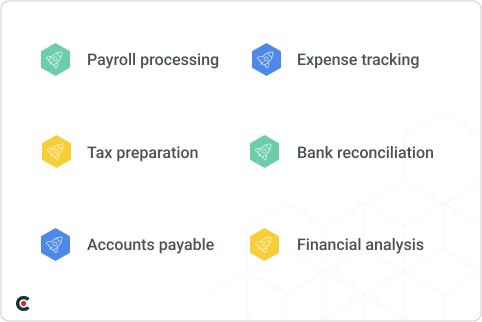
- Payroll processing
- Tax preparation support
- Accounts payable & receivable management
- Expense tracking
- Bank reconciliation
- Financial analysis
Payroll Processing
When processing payroll, a business is responsible for handling employee wages, deductions, and net pay. Bookkeepers check timekeeping, calculate tax withholdings, and generate pay stubs. Most importantly, they’re the ones that issue the payments to your employees.
That means you need someone to provide accurate and timely payroll every pay period in order to comply with labor laws and tax regulations. Hiring a bookkeeping team can speed up your payroll delivery and make it less prone to errors.
Tax Preparation Support
A dedicated bookkeeping team can organize your financial records, categorize each expense, and prepare tax forms on time. The goal is to maximize tax deductions and credits while reducing the risk of audits.
Hiring bookkeeping services can help you stay compliant with tax regulations and avoid penalties, making tax season stress-free. The team has the resources to navigate complex regulations and speed up your tax preparation process — which includes using specialized software to streamline data entry, calculations, and filing processes.
Accounts Payable & Receivable Management
A healthy cash flow requires smart management of accounts payable and receivable. Bookkeepers handle every aspect of this, including collections, payment tracking, invoice processing, and more.
This service can keep steady cash coming in while you strengthen your relationships with customers and suppliers. Bookkeeping outsourcing providers tend to automate many of the processes for maximum efficiency. This reduces late payments and improves forecasting even more.
Since bookkeeping providers are fully dedicated to your services, they can handle time-consuming tasks. Whether it’s invoice payment reconciliation or collection, they have the manpower and technology to take the burden off your in-house team.
Expense Tracking
Budgeting and cost control require accurate expense tracking. Bookkeepers can sort your expenses and reconcile receipts to keep proof of each expense. They also create expense reports for everything they find, i.e., what you have spent and can afford to spend.
This leads to better cost-saving opportunities and financial visibility. Bookkeepers also implement expense management policies to track every penny spent.
Bank Reconciliation
Reconciling bank statements may not be glamorous, but it's a vital aspect of bookkeeping. This means cross-checking all the expenses against their receipts. This way, a bookkeeper can find and fix errors — even the smallest one might be a sign of fraud or an overlooked payment that your organization will want to collect.
Many modern bookkeeping teams have already automated this process. That means there’s little chance of entering the wrong amount or making an error.
Financial Analysis
Bookkeepers also analyze your company’s financial data. This analysis helps them create financial reports, identify trends, and measure KPIs. The goal is to support informed decision-making and improve business performance.
A bookkeeping team can help businesses assess profitability, track financial progress, and identify areas for improvement.
How to Assess Bookkeeping Services
With so many options available, how do you know which bookkeeping services are working well for you? Tracking certain metrics and KPIs will tell you how they’re impacting your business performance.
Here are some important metrics to measure:
- Accuracy Rate: This KPI measures the percentage of error-free transactions and financial data.
- Timeliness of Reporting: This metric measures the speed at which financial reports are created and delivered. Timely reports allow you to make informed decisions much faster.
- Accounts Receivable Turnover: This metric indicates how efficiently a business collects payments from customers. A high turnover ratio means the invoicing and collection are effective.
- Compliance Metrics: This metric measures compliance with tax laws and financial reporting standards. Strong compliance is absolutely crucial in order to prevent risks and penalties.
- Client Satisfaction Ratings: This metric measures overall customer satisfaction with the tasks you've completed with the bookkeeping service's help.
What Is a Bookkeeping Team?
Bookkeeping teams offer the talent and experience of multiple different professionals. When you outsource your bookkeeping services, you’re paying for the expertise of:
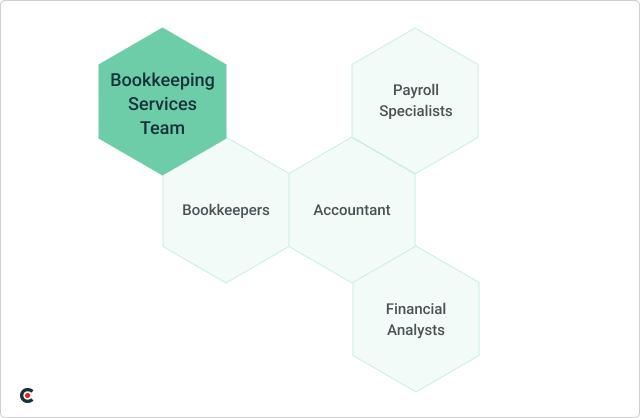
- Bookkeepers: These are the foundation of the team. They record financial transactions, sort the data, and reconcile accounts.
- Accountants: Accountants bring a broader financial perspective. They analyze financial data, create financial statements, and offer strategic insights.
- Payroll specialists: They focus on managing employee compensation. That includes calculating wages, taxes, and deductions.
- Financial analysts: These analysts use data to identify trends, predict financial performance, and support decision-making.
- Compliance officers: These make sure everything adheres to all applicable codes. They know all about financial standards, tax laws, and industry-specific compliance rules.
- Client managers: They are the primary point of contact for clients. They’re the people you’ll be communicating with when you hire their team.
What to Look For When Hiring a Bookkeeping Firm
When you’re looking for a bookkeeping team, there are three things you should look for: good innovation, communication, and problem-solving.
Teams that aren't afraid to break old habits with newer and better bookkeeping practices but don't sacrifice quality in a rush to keep up with superficial trends allow you to have the most efficient accounting possible.
A team that consistently reaches out for communication and feedback and is always ready to answer your questions or listen to your recommendations is one you can count on. Their transparency fosters trust and a healthy working relationship, and you’ll always be up to date on their performance and progress.
The team should also be able to perform under pressure. Their problem-solving skills will let them make the most of tax season, as well as respond quickly and well to unexpected situations (like the opportunity to buy out a faltering competitor).
Criteria for Hiring a Bookkeeping Company
Consider these factors when hiring a bookkeeping service provider:
- Expertise: Look for a bookkeeping provider with a strong track record in your industry.
- Services: Make sure their offerings align with your exact needs.
- Technology: Ask about their use of accounting software and technology.
- Pricing: Compare pricing plans with other providers and understand their fee structure.
- Scalability: Assess the firm's ability to grow with your business.
Most importantly, read customer testimonials. These reviews can give you an honest, unfiltered understanding of a business and the services it provides. You can look up detailed customer experiences on websites like Clutch.
10 Questions to Ask When Hiring a Bookkeeping Company
Before you hire a bookkeeping service provider, don’t forget to ask them these questions:
- What is your experience with businesses in this industry?
- How do you handle sensitive financial data?
- What bookkeeping software do you use?
- How do you stay updated on local tax laws and regulations?
- Can you provide references from similar-sized businesses?
- What is your process for handling errors or discrepancies?
- How often do you provide financial reports, and what do they include?
- What is your fee structure?
- How do you handle peak business periods, like tax season?
- What is your availability for questions and support?
Learn More About Vetted Bookkeeping Services With Clutch
Your business operations are incomplete without bookkeeping. But with Clutch, finding the right bookkeeping team has gotten easier than ever. Clutch maintains a database that has not only service profiles and ratings — giving you a sense of what each bookkeeping service offers — but also customer reviews that will help you make an informed choice.
Clutch offers detailed and honest reviews on over 35,000 vetted providers. That means that once you've put a provider on your shortlist, you can learn all about their past clients’ experiences before you even contact them.
Visit Clutch today to find the perfect bookkeeping service provider for your business.