Updated March 25, 2025
Businesses use cybersecurity measures to protect data and prevent financial losses. Penetration testing services can help you detect flaws and loopholes in your security protocols, allowing you to strengthen your defenses.
Organizations rely on a complex web of security measures to safeguard computer systems and data. For example, encryption and two-factor authentication prevent unauthorized users from accessing confidential information. Similarly, firewalls block malicious software and suspicious traffic.
While these protocols can reduce cyberattacks, many businesses still have security vulnerabilities. Penetration testing services assess your systems to identify potential weaknesses that could lead to data breaches and other incidents. They’ll also recommend strategies to update and fortify your security measures.
The skyrocketing number of cyberattacks has made penetration testing more critical than ever. In 2023, the Internet Crime Complaint Center (IC3) received over 880,000 complaints about cybercrimes causing over $12.5 billion in damages.
Take a proactive approach to cybersecurity with penetration testing. This guide provides an in-depth overview of how to hire penetration testing services, including available services and hiring criteria.
Browse Related Cybersecurity Services
What Are Penetration Testing Services?
Penetration testing services: The use of ethical hacking, social engineering, and other advanced techniques to perform mock cybersecurity attacks on an organization’s information technology systems. These services enable organizations to detect and mitigate security risks.
Penetration testing aims to identify vulnerabilities that may cause data breaches or get exploited by cybercriminals. Common security risks include outdated encryption methods, weak passwords, and unprotected Wi-Fi networks. Employees may also fall victim to social engineering tactics, such as phishing and USB drop attacks.
These threats have rapidly evolved as new technologies undergo development and cybercriminals invent increasingly sophisticated attacks. For instance, the rise of artificial intelligence (AI) has allowed cybercriminals to develop new phishing attacks and video cloning scams. In-house teams may lack the resources needed to keep up with these emerging threats.
Additionally, the complex nature of modern IT infrastructure can make it challenging to assess and improve cybersecurity systems. Depending on your tech stack — the technology and infrastructure used to build the applications you use — your cybersecurity team may need to evaluate cloud services, Internet of Things (IoT) devices, software, and more.
Penetration testing services fill knowledge gaps and support your in-house IT team. These experts offer a broad range of services, including:
- Cloud penetration testing
- Mobile and web application penetration testing
- Network penetration testing
- IoT device penetration testing
- Social engineering simulations
- Cybersecurity risk analysis
- Remediation planning
Penetration testing services help businesses address security vulnerabilities and prevent cyberattacks. These providers also help ensure compliance with IT regulations. Furthermore, partnering with these experts will allow you to protect your organization’s reputation and maintain strong customer relationships.
Penetration Testing Services by Country
-
 United States
Penetration Testing Services
5,521 Providers
-
 Canada
Penetration Testing Services
512 Providers
-
 Australia
Penetration Testing Services
419 Providers
-
 United Kingdom
Penetration Testing Services
637 Providers
-
 India
India
Penetration Testing Services
673 Providers
-
 Pakistan
Penetration Testing Services
87 Providers
-
 Philippines
Penetration Testing Services
25 Providers
Penetration Testing Services by City
-
 New York City
Penetration Testing Services
476 Providers
-
 Los Angeles
Penetration Testing Services
294 Providers
-
 Houston
Penetration Testing Services
142 Providers
-
 Chicago
Penetration Testing Services
222 Providers
-
 London
Penetration Testing Services
395 Providers
-
 Sydney
Penetration Testing Services
157 Providers
-
 Dubai
Dubai
Penetration Testing Services
176 Providers
5 Benefits of Penetration Testing Services
People often assume that only banks and tech firms need penetration testing. However, these services offer numerous benefits for businesses in all industries, from construction to retail.
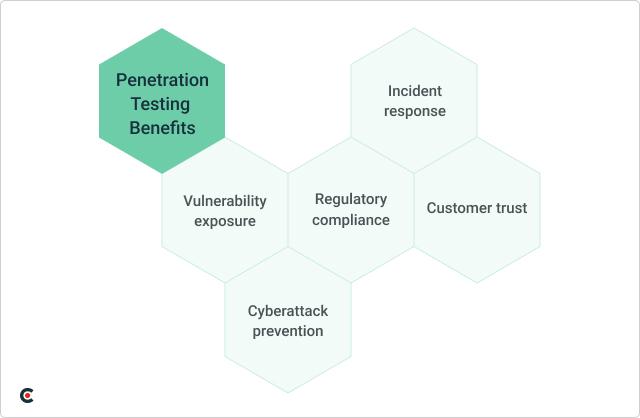
Here are five advantages of partnering with a penetration testing provider:
- Vulnerability exposure: Many IT devices and systems have imperceptible or easily overlooked security weaknesses. For example, a hospital’s electronic health records software may have encryption blind spots, allowing attackers to steal patient data. A penetration testing provider will thoroughly assess your IT infrastructure to reveal every potential vulnerability.
- Incident response: Even the most secure organizations may occasionally experience cybersecurity incidents. A penetration testing provider can respond to an active attack and halt it quickly. This service reduces potential damage and helps you recover faster.
- Regulatory compliance: Numerous laws govern data security. For instance, healthcare organizations must comply with the Health Insurance Portability and Accounting Act (HIPAA), while financial institutions follow the Gramm-Leach-Bliley Act. Penetration testing service providers make sure your organization’s cybersecurity practices adhere to relevant laws.
- Customer trust: Cyberattacks can damage your relationships with customers. According to a 2023 Vercara report, 75% of American consumers are willing to cut ties with brands following cybersecurity issues. Partnering with a penetration testing provider will help prevent incidents and maintain positive customer relationships.
- Cyberattack prevention: Penetration testing allows you to see your IT infrastructure through the eyes of a cybercriminal and spot weaknesses. You can use the insights you gain to fix vulnerabilities, reducing the risk of cyberattacks.
What Services Do Penetration Testing Companies Provide?

Penetration testing providers tailor their offerings based on each client’s cybersecurity goals and tech stack. Here are a few common services:
- Cloud penetration testing
- Network security
- Remediation services
- Web application penetration testing
- IoT device testing
Cloud Penetration Testing
Cybersecurity threats frequently target cloud applications and databases. For instance, an attacker could hijack an organization's cloud computing account to access confidential data. Attackers also breach cloud-based software applications by exploiting security misconfigurations and insecure APIs.
Providers use cloud penetration testing to evaluate the security of cloud-based apps and infrastructure. This process involves:
- Mapping the cloud environment
- Performing simulated attacks to detect security loopholes and weaknesses
- Conducting risk assessments to identify high-risk items
- Creating a remediation plan
Cloud penetration testing can help you proactively address security vulnerabilities and reduce the risk of costly data breaches and disruptions. It allows you to continuously improve your cloud security protocols and stay ahead of emerging threats.
Network Security
Businesses use complex networks to link assets and share data. These networks typically involve a combination of internal and external systems. For instance, an organization may have internal email servers and external file-sharing services. If any of these components aren’t properly secured, the entire network could get exposed to cyber threats.
A penetration testing team assesses the effectiveness of existing network security defenses. They can use many tactics to uncover potential weaknesses, such as:
- Gray box testing to simulate an internal attack from an employee or vendor
- Network scanning to detect unsecured devices and ports
- Phishing campaigns to identify employees who may be vulnerable to social engineering attempts
- SQL injection attacks to test the defenses of databases and web applications
Based on their findings, the penetration testing provider will recommend strategies to shore up your network’s internal and external defenses. For instance, they might suggest using access controls and restricting user permissions to prevent insider threats.
Remediation Services
Uncovering vulnerabilities in your cybersecurity protocols can be frightening and stressful. Your in-house team may not have the capacity or expertise to remedy these weaknesses, especially if they require advanced technical skills or time-consuming fixes.
That’s where a penetration testing team comes in. These experts have the specialized knowledge and tools needed to mitigate cybersecurity risks. They’ll help your organization develop and implement a remediation plan to improve defenses and close security gaps.
Remediation services are tailored to your organization’s specific needs and may involve these steps:
- Updating software
- Installing security patches, firewalls, and other measures
- Developing a threat-detection system
- Augmenting your internal cybersecurity staff
- Educating employees about cybersecurity best practices
Web Application Penetration Testing
Organizations use a broad range of web applications to communicate and manage everyday operations. These apps often contain confidential data, such as financial information and intellectual property. Attackers can target vulnerabilities in the applications to steal data and disrupt operations.
Penetration testing providers understand the ins and outs of web application development. They use this knowledge and penetration testing methods to detect coding and development flaws. For instance, a web application may have outdated features and unencrypted data, increasing the risk of attacks. The process helps businesses strengthen their security measures and protect their web apps from threats.
IoT Device Testing
The “Internet of Things” refers to physical devices that use the internet to communicate with other objects and systems. Businesses have increasingly integrated these innovative technologies into their workflows. For instance, a manufacturer may use IoT sensors to detect equipment failures, while smart shelves track store inventory.
Like computers and smartphones, IoT devices are potential entry points for cyberattacks. Cybercriminals may intercept data from unsecured devices or use them to gain access to an organization’s network. IoT device testing can help you spot and mitigate these vulnerabilities.
The penetration testing team will simulate an attack on your IoT system to test its resiliency and reveal weaknesses. This process may involve automated scanning tools and manual testing. For example, the provider may review device configurations to find potential vulnerabilities and monitor for abnormal network traffic that may indicate a breach.
Types of Penetration Testing
Penetration testing providers use various techniques to evaluate an organization’s defenses, including:
- Open-box penetration testing: The testers have complete knowledge of an organization’s IT architecture, applications, documentation, and networks. They use this information to analyze systems, inspect source code, and identify security risks.
- Closed-box penetration testing: The testing team has no information about the target business beyond its name. They imitate external hackers who try to infiltrate the system and uncover external vulnerabilities.
- Covert penetration testing: Upper management gives the testers permission to simulate attacks on a system without the IT team’s knowledge. This method allows the business to evaluate its in-house team’s ability to detect and manage threats.
- External penetration testing: Ethical hackers mimic outside attackers who attempt to breach an organization’s defenses. They typically use publicly available data to simulate real-world cyberattacks.
- Internal penetration testing: This approach focuses on an organization’s internal assets, networks, and employees. In internal penetration testing, the service checks to see how easily someone with employee access could inappropriately gain information or damage systems.
How To Assess Penetration Testing Services
The proactive nature of penetration testing services can make it challenging to measure their impact. After all, you can’t count data breaches that didn’t happen or thwarted attacks that were never completed. However, these key performance indicators (KPIs) can help you monitor the performance of your partnership:
- Number of security incidents: How many data breaches and other incidents an organization experiences in a given period.
- Intrusion attempts compared to security incidents: The ratio of intrusion efforts to successful breaches.
- Access management: The number of prevented access attempts from unauthorized users.
- Return on investment: The amount of money saved compared to the cost of the penetration testing services.
What Is a Penetration Testing Services Team?
Penetration testing requires many areas of expertise, from cryptography to web application development. As a result, providers often have diverse teams tailored to their clients’ needs.
Typically, a penetration testing team will include the following experts:
- Penetration testers/ethical hackers, who attempt to infiltrate an organization’s systems to identify vulnerabilities and propose solutions.
- Security analysts, who monitor for security threats, investigate breaches, and manage incidents.
- Compliance officers, who create policies and procedures to help organizations adhere to industry standards and laws.
- Project managers, who coordinate penetration testing projects, supervise testers, and communicate with in-house teams.
What To Look For When Hiring Penetration Testing Services
Not all penetration testing services are created equal. Weigh your options carefully to find the right partner for your project.
Start by assessing your cybersecurity goals and look for a provider who offers compatible services. For instance, if you’re concerned about insider threats, choose a partner with experience in social engineering. You should also prioritize industry experience when hiring penetration testing services.
Criteria for Hiring Penetration Testing Services
- Credentials and areas of expertise
- Communication style
- Pricing structure
- Remediation services
- Scalability
- Types of penetration testing offered
Reviewing customer testimonials can help you find a reliable partner with a track record of success. Use Clutch’s directory to search for penetration testing providers and read detailed reviews from verified clients.
10 Questions To Ask When Hiring Penetration Testing Services
- How much experience do you have working with businesses in our industry?
- What methodologies and techniques do you use for penetration testing?
- What are your team’s qualifications and levels of experience?
- What steps do you take to protect client data?
- How do you handle cybersecurity incidents?
- How do you identify and respond to false positives?
- What types of remediation services do you provide?
- How will your team communicate and collaborate with our in-house staff?
- How do you stay updated on the latest cybersecurity threats?
- What metrics do you use to measure the success of your penetration testing projects?
Use Clutch's Cybersecurity Budget Template to Plan For Your Business.
Download our Cybersecurity Budget TemplateSearch for Penetration Testing Services Based on Project Requirements
No two businesses have identical security needs and goals. Clutch can help you find the perfect partner for your specific project requirements. Our extensive directory allows you to narrow your search based on budget, areas of expertise, and other criteria. You can also review customer ratings and reviews to find providers who consistently deliver stellar services.
Gain Peace of Mind With Penetration Testing Services
Cyberattacks and data breaches pose significant risks for businesses in all sectors. These threats can lead to financial penalties, loss of customer trust, and other negative consequences.
Penetration testing services empower organizations to detect and remedy security weaknesses before incidents occur. Partnering with a provider will help you see your IT systems through the eyes of malicious actors and take steps to improve security.
Browse Clutch’s directory to hone your search and discover the ideal penetration testing services provider for your businesses.
Additional Services Guides
Related Articles
- Leveraging Outsourced Talent for Competitive Edge in Development & Cybersecurity
- 5 IT Services Trends That Will Dominate in 2024
- Rising Focus on Cybersecurity: Companies Gear Up to Boost Investments in 2024
- How to Choose a Cybersecurity Firm [Checklist]
- Cybersecurity Glossary: 73 Essential Terms
- How to Get Employees to Comply With a Security Policy