10 Actionable Link Building Tactics to Build Brand Authority & Legitimacy
Discover 10 actionable link building tactics to boost brand authority and rankings. Learn how quality backlinks build lasting trust in the AI search era.
Updated June 19, 2026

While SEO remains an important part of many marketers’ digital strategies, evolving SERP features and the growth of AI continue to impact organic traffic. This article dives into key SEO statistics, examining how some features, such as Google’s AI overviews, are reshaping the search landscape and how marketers should adjust their SEO strategies in 2025.
In 2025, mastering search engine optimization (SEO) is as crucial as ever for businesses that want to succeed. Each year, search engines like Google, Bing, and others process trillions of online searches, but most of the traffic generated by those searches is split between the first three entries on search results pages (SERPs).
SEO stats like that underscore the importance of ranking highly on search engine results pages (SERPs) when it comes to driving organic traffic to your business website. In fact, 32% of US consumers say they use search engines to find local businesses multiple times per week, but only 0.63% explore links beyond the first results page. If you're hoping for organic searches to help potential customers discover your brand, landing on page one is critical.
Looking for a SEO agency?
Compare our list of top SEO companies near you
Strategically leveraging SEO techniques is effective, cost-efficient, and proven to help businesses connect with new customers by boosting organic website traffic, enhancing brand awareness, and delivering quality, conversion-ready leads. The SEO landscape is changing in 2025, but the power it holds remains the same. View our list of the top stats in the SEO industry to kickstart your efforts in 2025.
Looking to hire an SEO specialist? Search for industry-leading service providers on Clutch. Filter by client ratings, location, and budget to find the perfect partner for your project.
The majority of marketers understand that the success of their digital marketing efforts depends on SEO. Optimizing for search engines can improve website performance and contribute to business growth because:
That said, even marketing teams that manage to translate SEO into measurable growth may cite frustrations with certain aspects.
Google's complex and ever-changing protocol of ranking and displaying search results is one such concern, as even minor fluctuations in the algorithm can mean major changes to SEO trends and best practices. Those changes often mean that businesses have to revise or even overhaul their marketing strategies. Another concern is the range of technical skills needed to implement and maintain successful SEO practices, such as familiarity with website design and the expansive vocabulary of SEO terms.
Despite such concerns, most SEO stats indicate how instrumental optimization was for effective digital marketing in 2024. Heading into 2025, expect SEO to remain a crucial component.
In May 2024, Google started using its artificial intelligence system, Gemini, to provide results overviews at the top of SERPs. These overviews include summaries, key takeaways, and links to relevant resources and websites. If you use Google for online searches, you've probably noticed them.
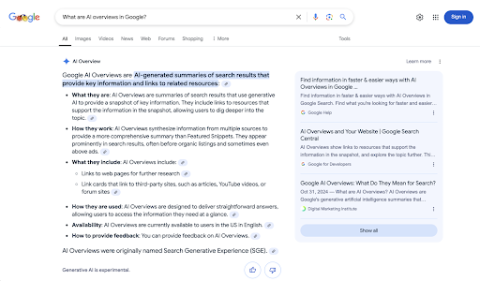
These AI overviews will only become more common in 2025 and will certainly impact SEO statistics. With AI overviews effectively answering user queries directly on the results page, consumers may be even less likely to click even the top-ranking links. This is expected to depress organic traffic by as much as 30%, according to some estimates.
"I'm no longer in the search marketing field, but when I was, I would have told folks to focus on the query terms that matter to *YOU* and your business, not those that broad industry studies use,” says Rand Fishkin, Cofounder of SparkToro and Snackbar Studio. “Those broad studies (of which I've done plenty myself!) are indicative of challenges or issues many marketers may face, but my advice is always to pay attention to your niche before panicking."
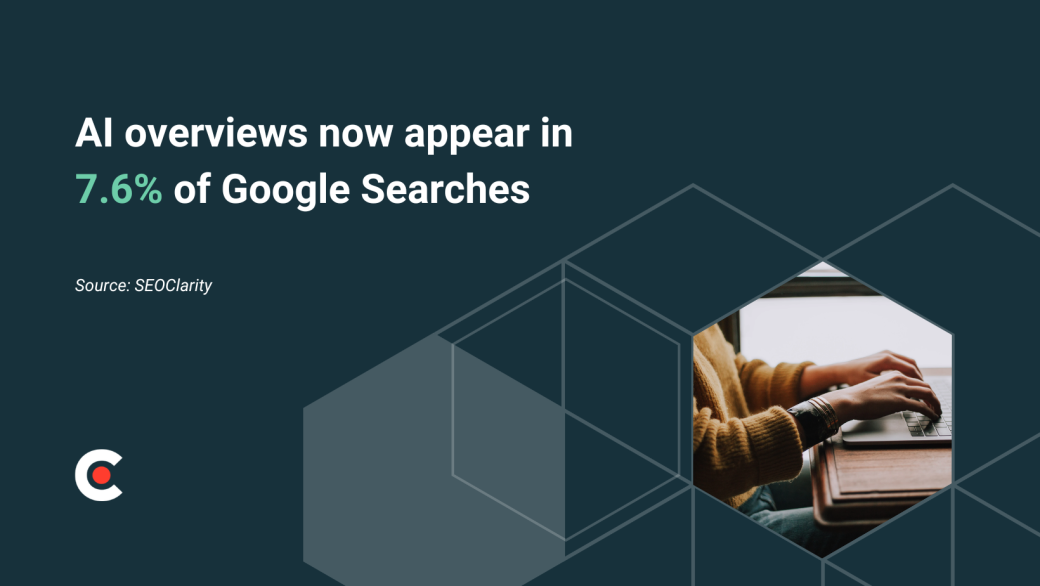
Rather than resist the infusion of AI technology into online searches, businesses should target innovations like Google's AI overviews with their SEO efforts. Why? Because even though your click-through rates may take a hit, effective SEO can help your site appear in the overview, leading to an increase in impressions and a boost in web traffic if users click on the links the overview provides.
Along with organic and paid listings, SERPs come with additional features designed to help users track down information. The "People Also Ask" (PAA) feature, which generates a list of related questions based on the user's current query, was the most popular of these in 2024 — an SEO stat that benefits users and businesses alike. PAA questions are based on the same algorithms Google uses to determine SERP rankings and are influenced by:
Targeting PAA by answering those questions in content and FAQ sections can widen the field of search results your site appears in, increase SERP visibility, and boost traffic.
However, targeting PAA and other SERP features alone isn't enough. Video is becoming increasingly popular in search results across many industries, signaling that an investment in video marketing will be a key factor for success for many businesses in 2025.
Google's Search Generative Experience, or SGE for short, officially launched in the spring of 2024 and is revolutionizing how users find and interact with information online. It uses GenAI to enhance search results with a range of built-in elements that answer user questions on the results page.
Search Engine Land studied 23 different websites to estimate the impact of SGE on organic traffic. While there are large variances in how SGE is expected to impact the organic traffic each website, the aggregate organic traffic drop was 18-64%. Nevertheless, you can expect SGE to make a big impact on your organic traffic in 2025.
“Search is one of the only channels that drives large amounts of visits you can see in your analytics,” said Fishkin on the importance of SEO. “But activity, online and off, in places where your audience pays attention, can result in far more brand lift, sales, and revenue than focusing myopically on only channels that show up in your analytics software."
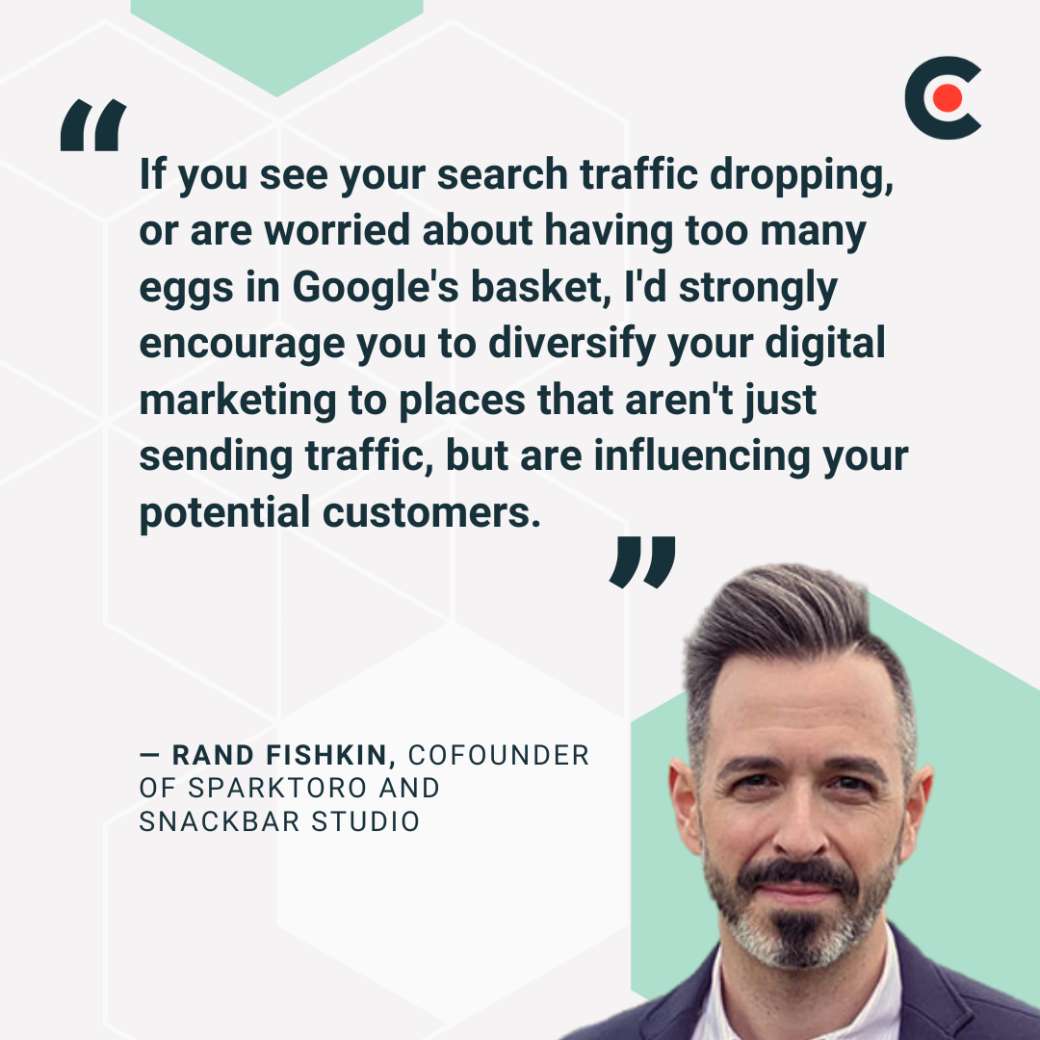
For many digital marketers, diversifying your traffic channels and targeting audiences where they are most influential can have the biggest impact on your bottom line. "If you see your search traffic dropping, or are worried about having too many eggs in Google's basket, I'd strongly encourage you to diversify your digital marketing to places that aren't just sending traffic, but are influencing your potential customers,” Fishkin advises.
With GenAI replacing links on SERPs with valuable resources, the challenge of getting them to click through to your business site will be even greater. It will require businesses to rethink their current strategies for boosting organic traffic, but it won't minimize the importance of SEO. With SGE on the rise, SEO will be more important than ever. Leveraging SEO tools to craft online content that appeals to SGE will be key to getting your content in front of users.
Although alternative search engines like Bing, Yahoo!, and DuckDuckGo are growing in popularity, Google held steady in 2024 as the preferred option for the majority of consumers. In addition to processing 80% of desktop searches, Google claims 60% of searches overall, across desktop and mobile, plus a 90% market share worldwide. When you consider the shares of Google's closest competitors, Bing and Yahoo!, are 3.9% and 1.3% respectively, it's easy to understand why tailoring your marketing to rank highly on Google is an imperative going into 2025.
So, what can businesses do to ensure prime SERP real estate, especially on Google? Key tips include:
As we mentioned earlier, Google's SERP algorithm is both mysterious and in a near-constant state of flux, so it's important to stay informed of the latest related news and trends in your industry, continually track and monitor your most important web performance metrics, and analyze your competitors’ techniques for insight into what works with your audience.
The previous SEO statistic reminds us that consumers continue to access the internet on their desktop computers. However, the boost in mobile device internet traffic in 2024 highlights an important shift in consumer preferences for on-the-go web access.
Mobile devices offer enhanced portability, accessibility, and convenience compared to desktop and even laptop computers. Smartphones and tablets allow users to access the internet wherever they want, whenever they want and feature comparable capabilities for most common uses, like online shopping, social media, and standard browsing.
In 2025, we can expect mobile internet usage to increase as tech advances continue to improve functionality and reliability. The United States is investing considerable resources in expanding internet connectivity across the country, especially in rural communities and other underserved areas, thanks to initiatives like:
As high-speed internet and 5G connectivity become more widespread, ensuring that consumers can reliably connect with your brand on mobile devices will be even more important in 2025. Optimizing your website for mobile viewing means focusing on fast-loading pages by cutting out elements that slow down page speed, like large images, excess plug-ins, and pop-ups; implementing responsive design so pages automatically adjust to various screen sizes; and producing scrollable content.
Click-through rate (CTR) refers to the number of times users click on a link or call-to-action button. In terms of SEO stats, CTRs indicate that your digital marketing is not just reaching consumers, but also that consumers find it relevant and useful.
Acceptable CTRs vary depending on industry, marketing medium, and specific ads, but in general, a CTR between 2% and 5% is considered good. The average search ad CTR is 3.17%. To boost the CTR of your search ads and other digital marketing efforts, leverage common SEO tools like:
Additionally, a focus on creating compelling marketing content that engages consumers can help improve your CTR. To engage your audience, make sure your digital marketing includes high-quality images, clear and easily accessible CTAs, and personalized content such as data-based product recommendations.
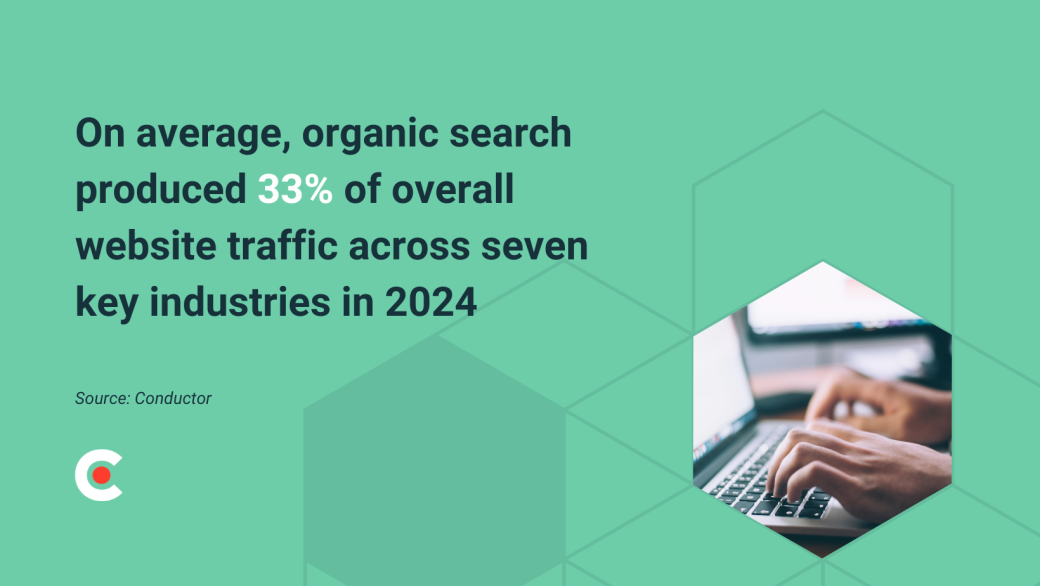
Across industries like retail and hospitality to tech and finance, organic traffic is still an important for businesses looking to expand their reach and grow their customer bases.
Paid and direct traffic have their uses, but in 2025, businesses should continue to focus on making it easy for consumers to find them via online searches. In other words? Double down on your SEO practices to improve your SERP ranking.
Keep a close eye on important metrics like bounce rate and CTR so that you can identify where your digital marketing is succeeding and where you're struggling to connect with your target audience. And stay on top of SEO stats and trends so that you're ready to adapt to new technologies like Gen AI and change course when necessary.
SEO statistics from the past year offer important insights into the future of digital marketing and what businesses should expect in 2025. The takeaway? Big changes are coming, and business success will require flexibility and ingenuity in the face of those changes. Here are some of the most important SEO insights to keep in mind going into 2025:
Whether you need an SEO company to help you optimize your website for mobile devices, fine-tune your on-page or off-page SEO, or restrategize your digital marketing in the age of AI, Clutch can help you refine your search and find the partner for your business.