
How to Measure SEO Success When Traffic Declines
Organic traffic is down, but is your SEO failing? Learn which metrics show real SEO success when AI Overviews and zero-click searches are reducing clicks.
Updated April 24, 2026

Artificial intelligence is reshaping the search landscape, altering how engines like Google rank and deliver content. This article provides B2B companies with practical SEO strategies to adapt to these AI-driven changes, ensuring sustained visibility and lead generation.
Search engines are no longer just keyword-matching mechanisms; they are intelligent systems driven by AI. Google's Search Generative Experience (SGE) now, for example, uses generative AI technology to serve direct answers and summaries at the very top of search results, frequently eliminating the need for users to visit websites. This development affects organic visibility, particularly among B2B firms where search traffic is used to generate leads. With AI models now incorporated into ranking algorithms, classic SEO strategies are being rewritten—content must now be appealing to machine learning systems where context, intent, and user behavior trump mere keyword density.
For B2B companies, this translates to the possibility of declining click-through rates since AI responds to questions on the searched page itself. It also presents an opportunity for those who are agile. By learning how AI responds to queries, businesses are able to position themselves to be featured in featured snippets or AI summary results.
Looking for a SEO agency?
Compare our list of top SEO companies near you
AI-fueled search engines desire structured, substantive data on which they can interpret and rank content. Structured data (see Google's guidelines), such as schema markup, makes it easier for the AI to understand the content's context, such as product information, pricing, or services available if you are a B2B software company. Using schema.org markup can pull your content into rich results or AI summaries, increasing visibility even if the website has fewer clicks.
In addition to structure, the depth of content is valued. The algorithms prefer complete resources, spanning topics thoroughly. As a B2B consulting agency, this may translate into crafting lengthy guides on industry issues instead of superficial blog entries. Subject authoritativeness—making your site the point of reference in a given niche—is just as relevant. As an industrial equipment maker, concentrate on deep content clusters on your products, connecting relevant topics together to indicate expertise to AI algorithms.
Google’s E-E-A-T framework remains central, and its application is evolving with AI. For B2B sites, make each element verifiable. Publish named case studies with methods and outcomes, credit qualified authors and link to their credentials, cite independent recognition with a source, and maintain clear ownership and contact details on a secure domain.
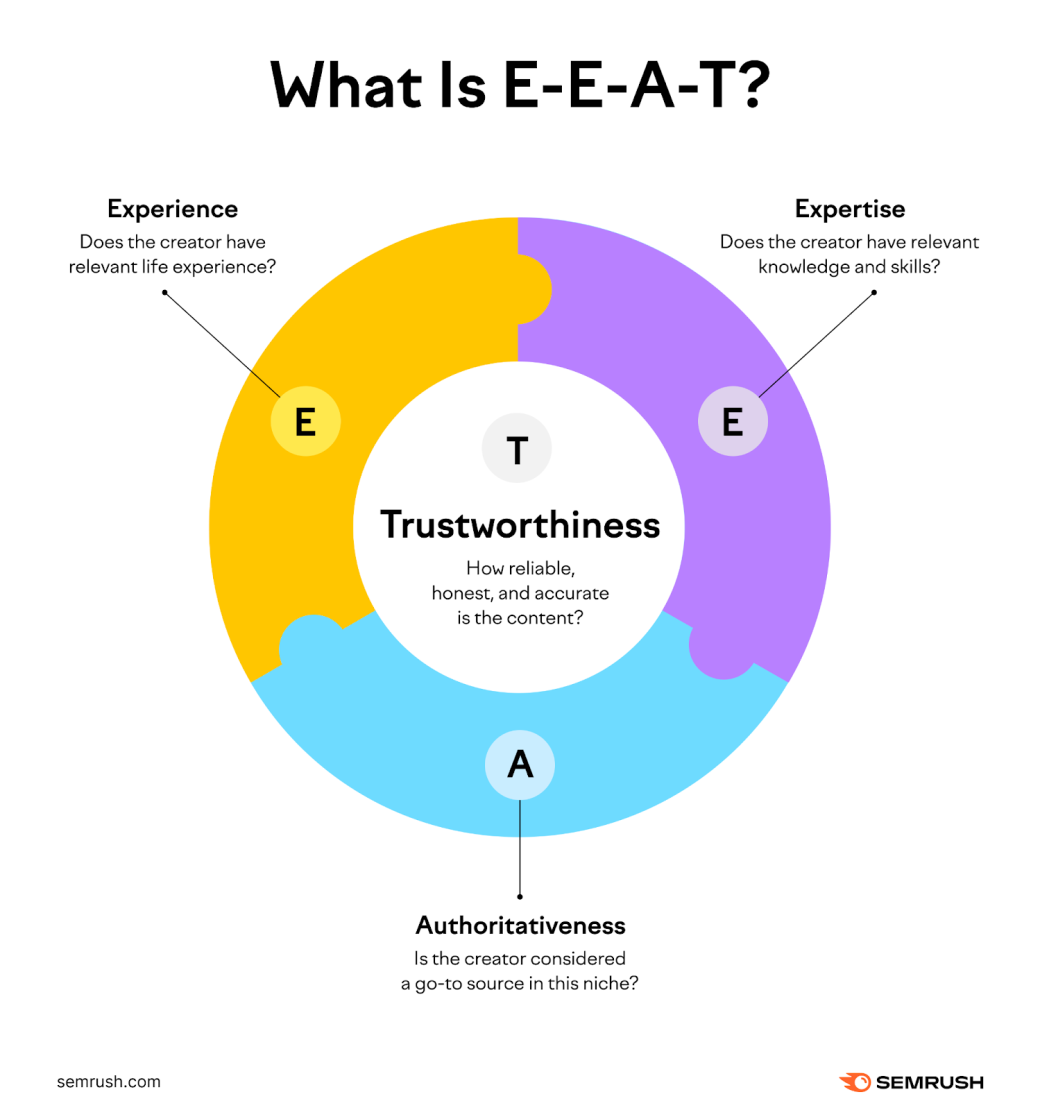
Healthcare example (MAX Digital experience): Below is a healthcare-specific checklist for adapting E-E-A-T to AI-driven search. Use it as a pattern for other regulated industries such as finance or manufacturing.
AI increases the demand for branded authority signals in the medical niche. A telemedicine company, for instance, may release whitepapers or blog articles that are written under the name of specific medical doctors, like a Chief Medical Officer with externally verifiable credentials (e.g., board qualifications or LinkedIn profiles). Including author credentials and linking to their professional achievements guarantees AI will mark the content as trustworthy and credible, even while prioritizing answers over traditional rankings.
By focusing on E-E-A-T factors, a medical niche website can establish itself as a reliable information source among B2B customers such as healthcare professionals or managers. This approach not only aligns with AI-driven search preferences—where context and credibility are necessary—but also earns long-term trust among human decision-makers in pursuit of reliable partners within the medical field.
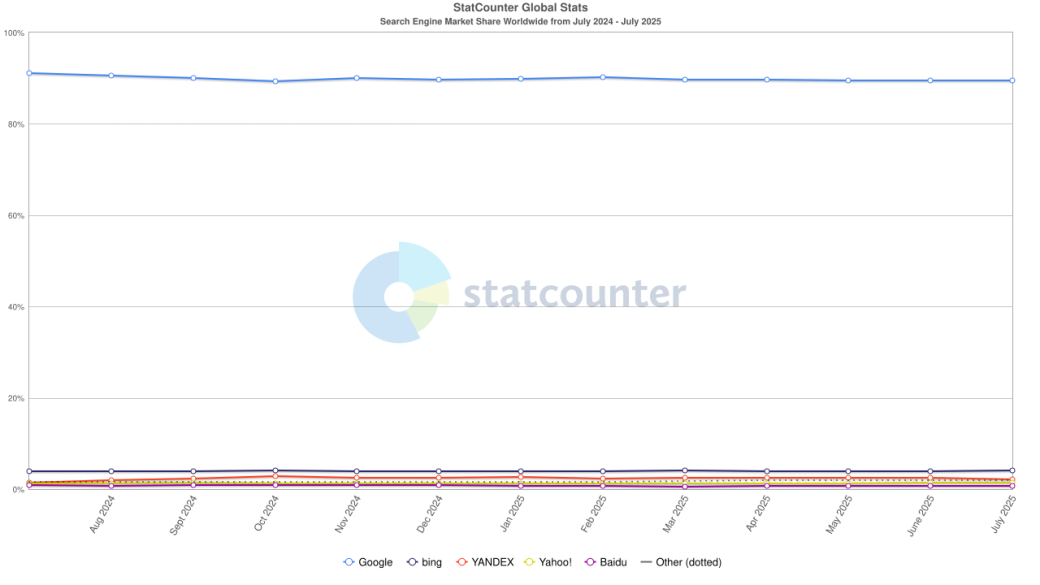
According to StatCounter, Google’s global search share has fallen from approximately 91.1% in June 2024 to around 89.5% in July 2025, down 1.6 points over 13 months.
AI is transforming the way users search, and voice search and zero-click results are on the rise. Voice searches, usually longer and conversational, need content that responds to specific questions naturally. A B2B logistics company may optimize with long-tail terms such as "shipping cost reduction advice for enterprise customers" in order to attract voice search traffic. Zero-click results, where AI responds and does not send the user to a site, need optimization of featured snippet and direct-answer content.
Technical SEO also comes into play. Page speed, mobile-friendliness, and crawlability make it possible for AI bots to find and index your content efficiently. Brand signals, or frequent mentions across platforms, also enable AI to match your company with certain industries or solutions. For instance, a manufacturing firm could ensure its brand appears in industry directories and forums to reinforce relevance.
B2B companies don't need to overhaul their strategies overnight. Start with low-risk experiments to test AI readiness:
Use these experiments as the baseline for brand visibility in AI-driven results. Make them non-negotiable in your SEO strategy and track impact at least monthly.
Search is a predictable lead generation channel for B2B decision-makers, but AI introduces uncertainty. Generative answers might divert traffic, disrupting funnel predictability. Yet, companies that act now can turn this into an advantage. By aligning with AI trends, such a consulting firm would be able to conquer niche searches, increasing market share while others fall behind. This compass—focused around structured data, authority, and experimentation—is a path to continue being seen and convert search traffic into qualified leads, while algorithms change.
Imagine a managed services provider that overhauled content for AI search through the inclusion of detailed FAQs and gathering backlinks from tech media and blogs. Just in six months, they reported 20% more organic leads, demonstrating that preparation is key. B2B leaders should not regard AI as a threat but as an instrument to fine-tune their online presence.
As a digital marketing and SEO expert with more than a decade of experience, we are entering the most meaningful and demanding phase in the evolution of search. Artificial intelligence is not eliminating SEO. It is refining it by stripping away outdated tactics and highlighting what matters most: genuine usefulness, trust, and expertise. Google is no longer the only gateway to users. B2B brands that learn to appear in AI platform responses, including generative search summaries and voice assistants, will gain durable advantages. Experts who remain dependent on traditional factors such as metadata and backlinks risk falling behind; thus proactive evolution becomes critical in maintaining lead generation and market share.
AI-driven search is LIVE today, and its impact on B2B companies will only grow. By embracing structured data, building topical authority, strengthening E-E-A-T signals, and running thoughtful experiments, companies can future-proof their visibility. Perform a 50-query audit this week and record which results include AI summaries, what domains are cited, and how your CTR changes on those terms.