
How to Measure SEO Success When Traffic Declines
Organic traffic is down, but is your SEO failing? Learn which metrics show real SEO success when AI Overviews and zero-click searches are reducing clicks.
Updated March 26, 2026

Not all SEO keywords are created equal. Learn how to find the highest-impact ones for your business goals in this practical guide.
Despite the numerous SEO changes in recent years, keyword research remains one of the most foundational elements of a successful SEO strategy. When done right, it connects your brand with motivated leads, drives traffic, and delivers bottom-line business results. But getting keyword research right tends to be easier said than done.
Looking for a SEO agency?
Compare our list of top SEO companies near you
This guide to high-impact keywords covers eight tips that can help. Discover what high-impact keywords are, how to locate them, and effective strategies for attracting the right kind of traffic.
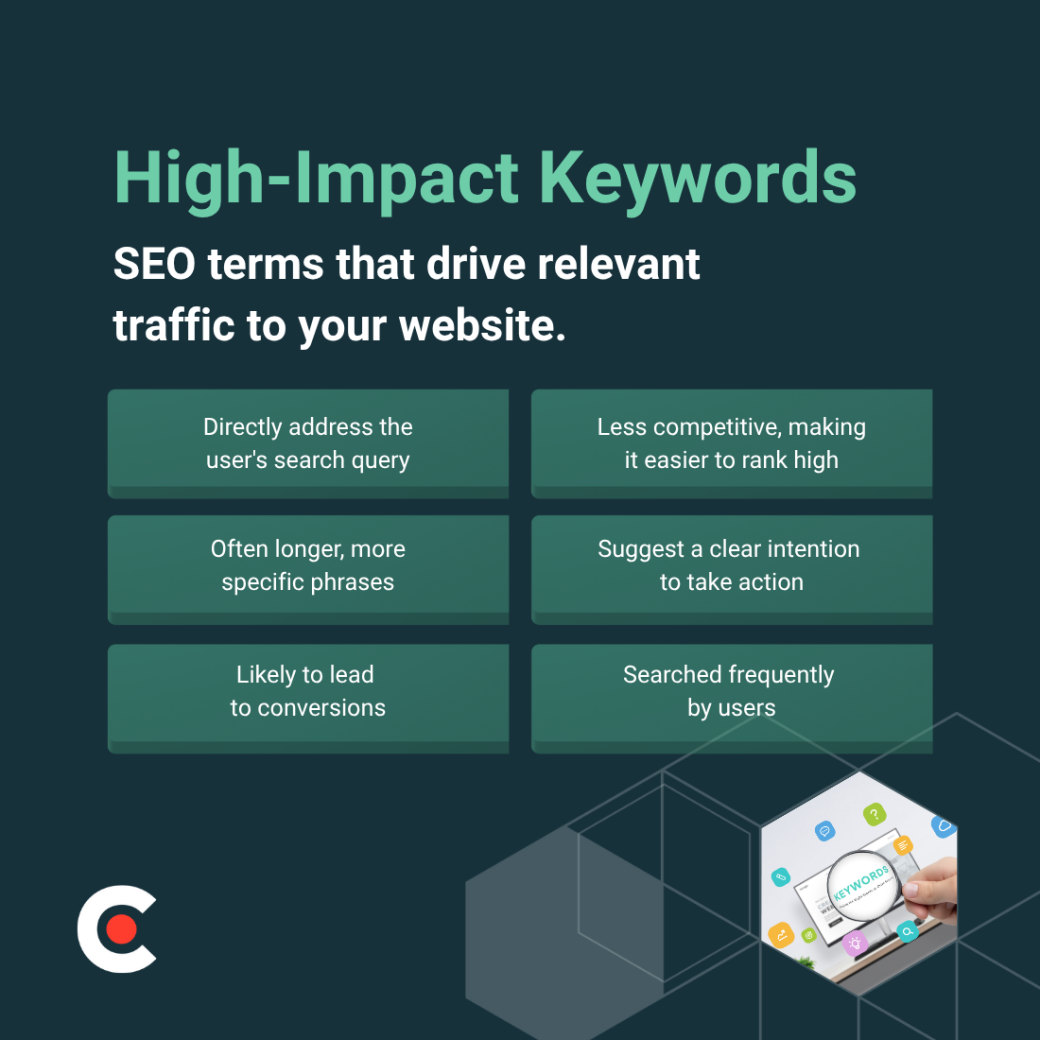
High-impact keywords are SEO terms that drive relevant traffic to your website.
Peter Palarchio of NAV43 refers to them as the “critical search terms that your ideal customers use when they’re ready to engage or buy.” He also says, “Hitting them can be a game-changer for your business.”
To understand why, let’s briefly review the concept of search intent, or the reason behind a user’s search:
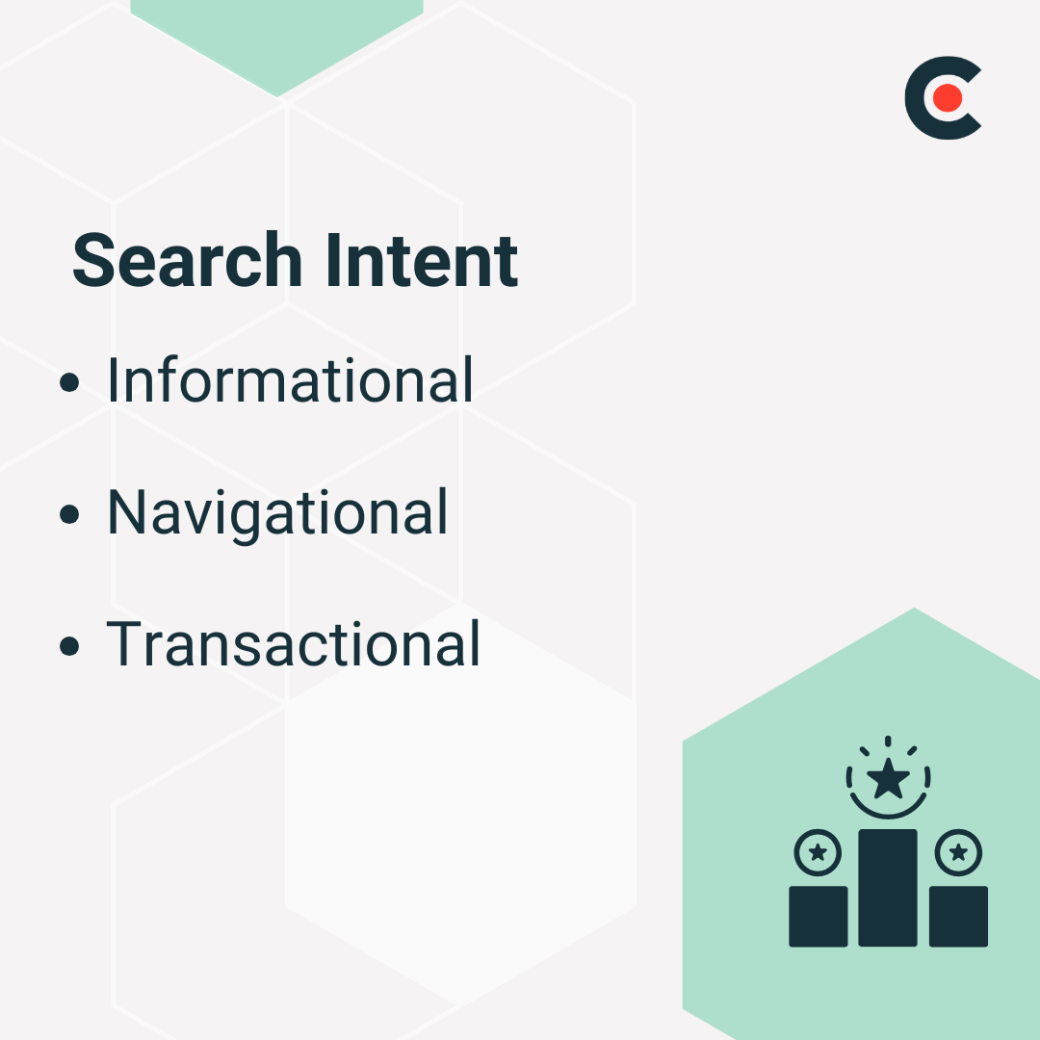
High-impact keywords tend to align with transactional or high-value informational search intents. In other words, they bring leads to your site who are near the bottom of your sales funnel.
This makes them extremely valuable, as Jaye Cowle, CEO & founder at Launch Online, explains: “Ultimately, getting the RIGHT people makes any media investment work harder in the short and long run.”
By targeting high-impact keywords, you can achieve more with the same SEO budget.
But remember that high-impact doesn’t always mean high volume. For this type of SEO, it’s more important to focus on connecting with the right leads instead of as many as possible.
Follow these eight keyword research tips to find and target more high-impact SEO terms.
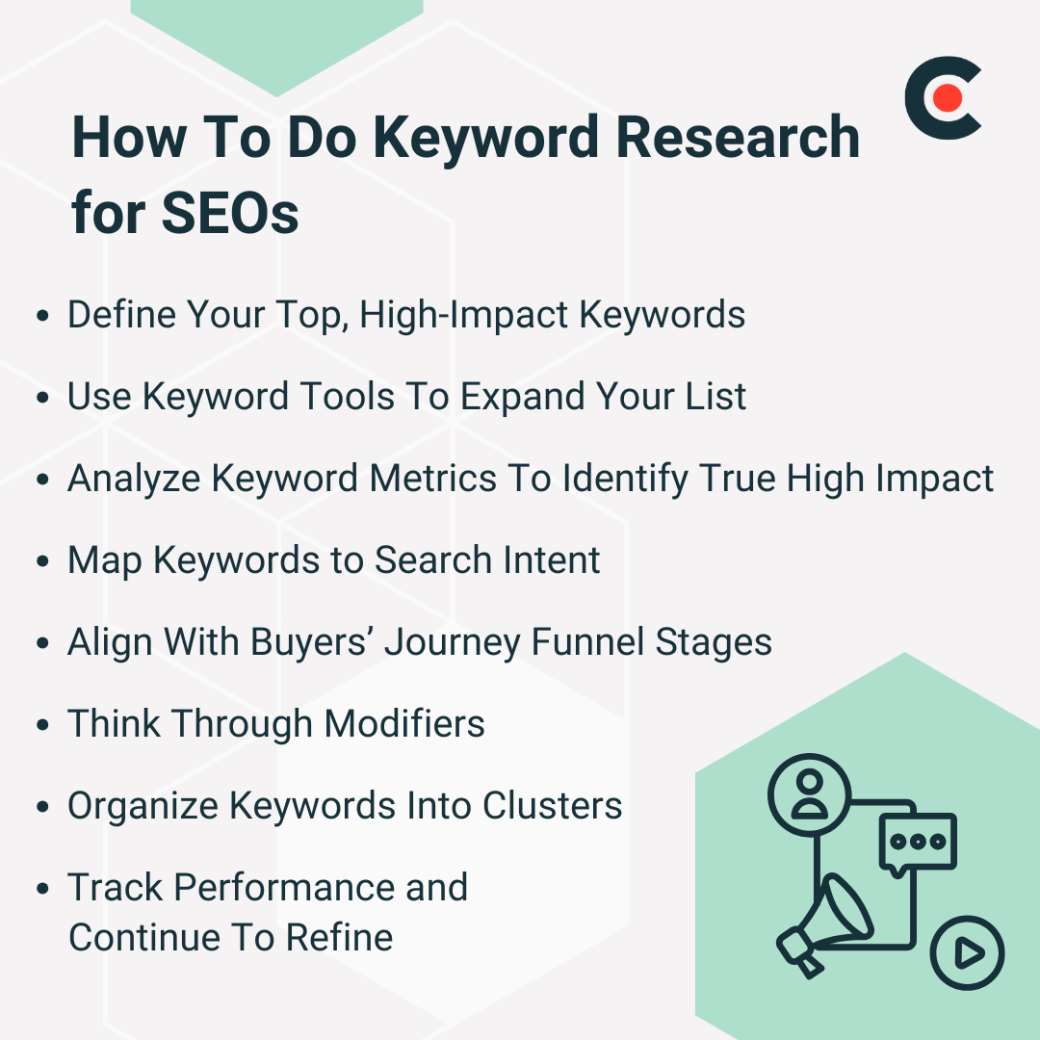
Start by reviewing your current SEO strategy to see which keywords drive the most conversions for you today. These may be worth investing more in, especially if even your highest SEO conversion rates are relatively average.
You can use your products, blog topics, and services as starting points for the project. Many marketing teams brainstorm ideas based on customer questions, competitors’ best-performing keywords, and industry-specific terms.
It’s also worth reviewing the value your products provide to your target audience at this early stage. You probably already have a good sense of that.
David Ebner, President at The Content Workshop, says, “You can not properly position your product to solve your potential customers’ problems without knowing how they search for solutions first.”
Make sure your understanding aligns with how customers think, as reflected in their search queries.
Next, use tools to expand your list of high-impact keywords. There are a variety of keyword research services that can help you do this, including:
These platforms can help you discover new high-impact keywords and SEO terms related to keywords you already know. They also tell you how competitive each SEO phrase is, so you can get a better sense of how much you may need to invest to beat the competition.
It’s worth exporting the lists you generate for deeper analysis. For example, you can pull reports from several of the platforms listed above, export the lists, and combine the findings. This enables you to sort data based on the metrics that matter most to your goals.
You’ll be able to create custom formulas to identify the highest-impact keywords, filter results based on competitiveness, and gain deeper insights into the research overall. It’s easier to miss opportunities when you review data sets by platform instead of examining the complete data set.
The next challenge is reviewing your keyword findings to pinpoint the highest-impact SEO terms. You should prioitize based on value, not just traffic potential. Otherwise, you’ll get more visitors but not necessarily more sales.
There are a variety of metrics to look at while making these decisions, including:
Each of these metrics matters, but you can only make an informed decision by considering them together. For example, it may be worth targeting a highly competitive keyword if ranking for it could transform your sales process. It’s important to consider all the context before deciding which keywords you’ll target.
At this point, you have a list of high-impact keywords to target. The next step is mapping those keywords to the search intent of users who type them.
For example, the phrase “affordable clothes near me” shows an intent to make a purchase. But the long-tail keyword “best clothing materials for winter” shows informational intent.
Iulia Vasciuc, CEO of ScaledOn, summarizes what you should be looking for in a high-impact keyword nicely: “High-impact keywords capture real buyer intent… It’s the difference between window shoppers and ready-to-buy customers walking through your door.”

Mapping keywords to search intents helps you understand the kind of content you’ll need to rank
Once you’ve mapped keywords to search intent, you can group them based on how they align with your sales funnel. For example, keywords that indicate general interest belong at the top of your funnel, while those that indicate transactional intent belong near the bottom.
This can help you create the right kind of content for each high-impact keyword on your list. You’ll show leads exactly what they need to see to take the next step towards conversion, rather than pages that only partially align with their needs.
As you develop your list, it’s also worth looking for opportunities to modify keywords. Slight changes to the keywords you’ve found can help you rank for more competitive terms and increase conversions.
Some common modifiers include:
For example, there may be too much competition to rank for the phrase “Best CMS software.” However, by modifying it to “Best CMS software for small business owners,” you can appeal directly to a specific type of customer and achieve the desired SEO performance.
Next, organize the keywords you find into clusters of related terms. This can enhance your site’s topical authority, a factor that Google considers when determining page rankings. It’s also a way to rank for multiple keywords with a single piece of high-value content. You can also interlink pages in each keyword cluster to keep users on your site for longer and drive additional traffic.
Finally, track your performance over time and adjust your approach based on the data you collect. For example, if you’re ranking well for a high-impact keyword but have a high bounce rate, your content may need to improve. Or, if you notice a sudden drop in traffic for a high-performing term, it may be time to update the page to improve your ranking.
Chad de Lisle, VP of Marketing at Disruptive Advertising, says, “The goal shouldn’t just be to rank — it should be to own the conversation…”

Watching key performance indicators (KPIs) helps you do that. If you continue refining low-performing aspects of pages over time, there’s no reason why you can’t rise to the top of key search pages. This is critical for success in competitive keyword research.
In today’s highly competitive SEO landscape, your strategy needs to achieve more than increasing web traffic. Andy Groller, President and CEO of Dragon360, says, “The real goal isn’t ranking, it’s reaching the right person, at the right moment, with the right message.”

High-impact keyword research makes that possible. It combines relevance with intent and technical SEO structure to help your business connect with more motivated searchers.
That could be the key to unlocking long-term SEO success, but only if you watch the data and refine your approach over time.