Lead Quality vs. Lead Quantity: Why B2B Teams Are Rethinking Their Funnel in 2026
Bigger buying committees and tighter budgets are forcing B2B teams to rethink lead quality vs. quantity. Here's how top teams rebalance the tradeoff in 2026.
Updated April 23, 2025

In only a few years, AI has gone from a distant fantasy to an essential communication tool. Discover how PR professionals use this technology to spark ideas and prevent crises.
Now that artificial intelligence (AI) has been mainstream for a few years, it’s clear that it’s not going to wipe out public relations (PR) jobs anytime soon. Sure, ChatGPT can write a decent(-ish) press release. But it can’t build relationships with journalists or tell authentic stories. And it certainly can’t put out fires during a PR crisis.
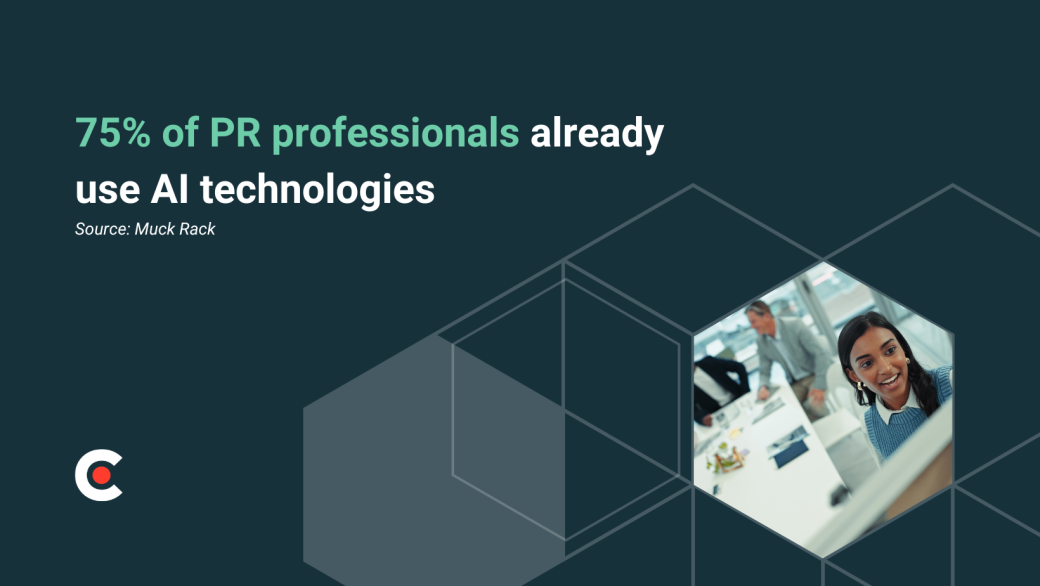
As initial fears about evil robots fade, many PR specialists use generative AI to assist with — not take over — their tasks. Muck Rack’s The State of AI in PR 2025 report found that 75% of PR professionals already use this technology — up from just 28% in 2023. And only 6% of respondents say they never plan to use AI at work.
Looking for a Digital Marketing agency?
Compare our list of top Digital Marketing companies near you
AI's growing popularity means big changes for PR firms. While most of these changes are positive, there are a few ethical considerations to remember if you want to use this technology.
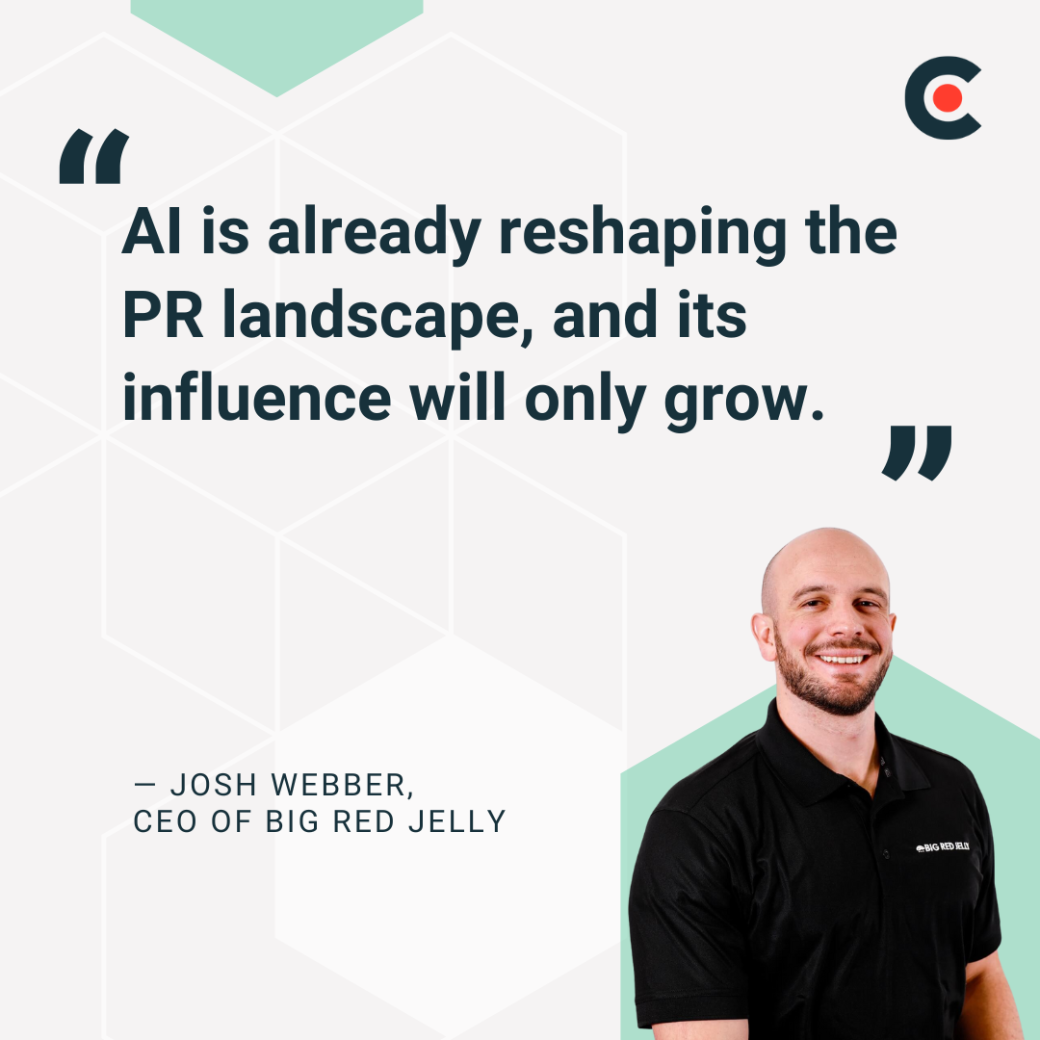
AI has gone from an abstract sci-fi concept to an everyday tool in just a few years. “AI is already reshaping the PR landscape, and its influence will only grow,” explains Josh Webber, Co-owner of Big Red Jelly.
By now, you’ve probably experimented with using tools like ChatGPT to draft copy or answer questions. But that’s only scratching the surface of AI applications in PR.
Webber shares, “It can automate tasks like media monitoring, sentiment analysis, and content creation, freeing PR professionals to focus on strategic initiatives.”
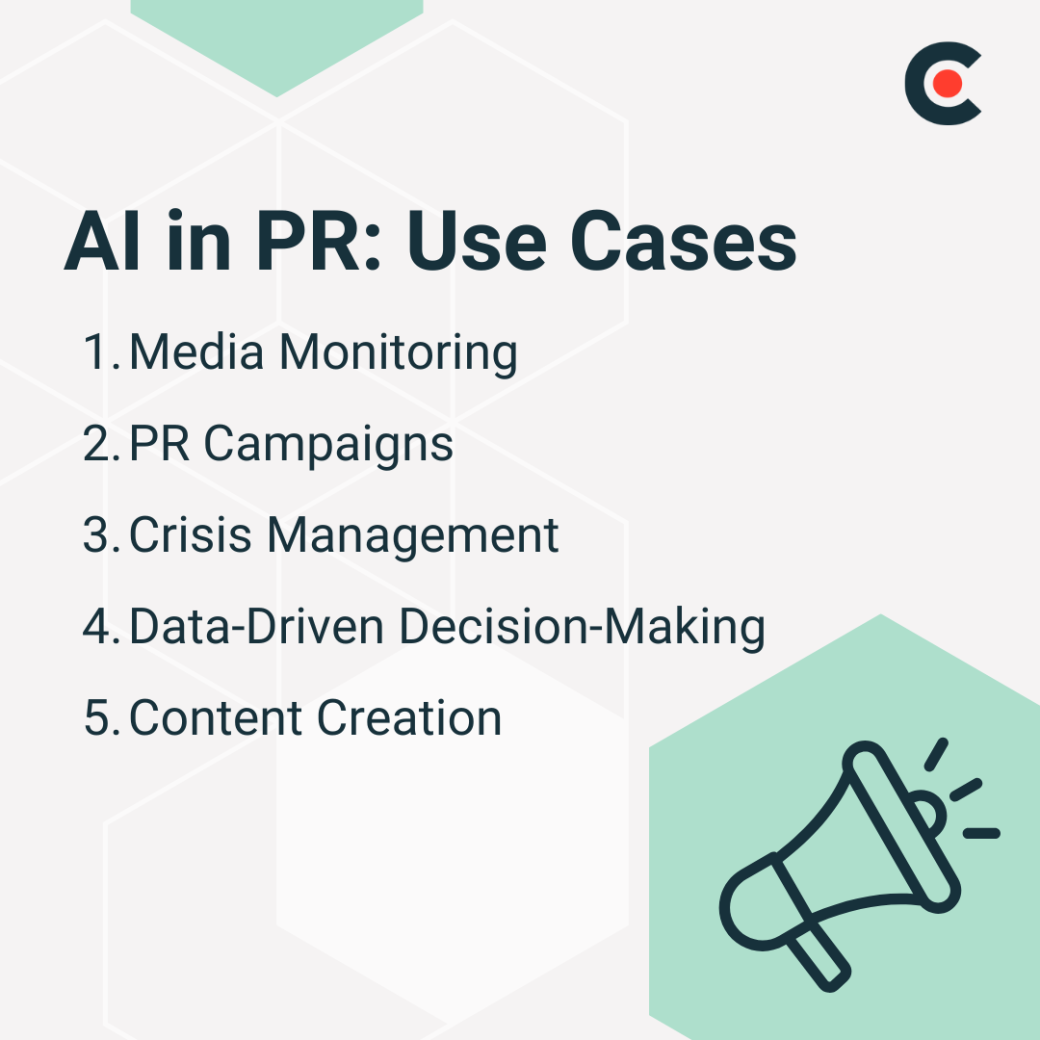
Here’s a quick breakdown of common AI PR uses:
There’s simply not enough time in the day to check every media outlet for mentions of your brand. Factor in social media, and the task becomes even more impossible.
The cost of missing media mentions can be high. Before you even notice it, a snarky Reddit post or a critical news article could wreak havoc on your brand's reputation. More positively, an influencer might praise your brand in a popular post. The hype may have faded if you only come across it weeks later.
With so much at stake, many businesses use artificial intelligence for 24/7 media monitoring. Platforms like Brand24 and Determ use AI to constantly scour the internet and instantly notify you whenever someone talks about your brand.
These tools also analyze the sentiment of online conversations. If 90% of your mentions are positive, you’re doing something right. But if negative mentions suddenly spike, there could be a crisis brewing. With constant monitoring, you can step in quickly to defend your reputation.
Even the savviest PR pros can sometimes struggle to capture attention. Artificial intelligence can help you create intriguing campaigns that get the media buzzing.
Take the “Feel the Art of Audi” campaign, for example. Supermodel Coco Rocha drove the Audi Q8 e-tron while connected to biometric sensors that “measur[ed] her every feeling and emotion with the vehicle as data.” The carmaker used an AI engine to turn the data into a surreal art film that uses different colors to reflect Rocha’s emotions.
This creative campaign received widespread coverage in outlets like Architectural Digest and the Toronto Star. Rocha also promoted it on her social media accounts, gaining thousands of likes.
Of course, you don’t need to use AI in the campaigns themselves. It’s also a powerful brainstorming and editing tool. You could ask ChatGPT to suggest campaign ideas with prompts like “Suggest 10 ways to promote my athletic brand on TikTok that will appeal to Gen Z nature lovers.” Then, you can use your expertise and intuition to develop the campaign.
There’s nothing worse than being caught off guard by a PR crisis. Disgruntled clients, lawsuits, product recalls — any of these situations can blow up overnight.
Tools like Signal AI and Palowise use AI to analyze media coverage and social media chatter. They predict potential crises and warn you before things escalate. That way, you can immediately leap into damage control mode.
This proactive approach can help you protect your reputation instead of scrambling to respond. If customers start bashing your products on Facebook, for instance, AI can alert you before their posts go viral. You might intervene by offering to reimburse the customers or explaining how you’ll fix the issue.
However, not all crises are avoidable. In those situations, AI can help you respond gracefully under pressure. For example, generative AI can assist with drafting an apology letter. Or you could use AI-powered chatbots to answer customer concerns. But you should never attempt to respond to situations with AI alone. Customers want human empathy and accountability, not hollow reassurances.
Vanderbilt University offers a cautionary tale. In 2023, administrators sent a “consoling email” to the campus community following a mass shooting at Michigan State University. Students were outraged when they noticed fine print at the bottom of the email stating that the message was “a paraphrase from OpenAI’s ChatGPT AI language model.” While the university apologized for the misstep, dozens of news outlets had already circulated the story.
But don't let that scare you off. With human oversight, AI can be an invaluable crisis management tool.
Even the most straightforward PR campaigns involve dozens of choices. Your team might waste hours debating everything from which influencer to hire to the correct fonts.
AI tools can help you speed things up and make smarter choices. You can analyze key metrics, such as social media engagement and impressions. This data reveals what’s working and where you can improve.
At PepsiCo, a custom artificial intelligence tool called Ada has taken the guesswork out of decision-making. When the company wanted to promote drinks in Egypt, it used Ada to predict what customers wanted. The platform revealed that “Egyptian youths were ‘thirsty’ for change and opportunity.” Pepsi met this hunger by filming inspirational commercials with Premier League footballer Mo Salah, the captain of the Egypt national team.
Of course, you'll still want to exercise your human judgment so decisions make sense for your brand.
You're not alone if you’ve ever used AI to dash off a quick email or Instagram caption. According to the Muck Rack survey, 72% of PR professionals use this technology to write a first draft, and 59% use it to create social copy.
Additionally, 16% of PR representatives use AI to generate images. Platforms like Midjourney and Dall-E can turn textual descriptions into art. For example, Culture Pop Soda used AI to create a whimsical commercial about a fox fantasizing about escaping his office job.
However, you shouldn’t just copy and paste whatever AI spits out, especially when communicating with customers. Even the best AI content can seem robotic or just downright weird. Netflix, for example, recently drew controversy after it released an AI-generated poster for the second season of Arcane. Sharp-eyed fans quickly noticed that a character’s hand looked distorted, leading to a backlash.
AI also can’t capture all the nuances of your brand’s voice. If you prompt a generator to “write an email about an upcoming holiday sale using a peppy voice and Gen Z slang,” the result might sound more cringe-worthy than hip. Avoid this issue by using AI as the starting point for content creation, not the end. Once you’ve generated a first draft, you can add all those special touches that make stories feel authentic and human.
Once you’ve polished your content, AI can help you adapt it for different platforms. If you write a blog post, for instance, Invideo can transform it into a video.
AI PR tools can be incredibly useful, but only in the right hands. As Webber explains, “Ethical considerations are paramount.” Used carelessly, AI can quickly become a liability.
Webber encourages PR professionals to look at the big picture. He says, “Key areas to focus on include transparency, accuracy and bias, data privacy, authenticity, and avoiding AI-generated misinformation.”
Always balance AI with a human touch. Even the most high-tech tools can’t show empathy or tell genuine stories. Drawing on personal experiences and emotions can turn bland AI content into something meaningful.
Look out for potential bias, too. Like humans, AI can unintentionally produce misinformation or even reinforce stereotypes. You're gambling with your reputation if you take all its outputs at face value.
In 2024, the book-tracking app Fable learned this lesson the hard way. Customers were horrified when they received offensive AI-generated summaries of their reading habits. For instance, the AI told one reader, “Your wild journey through disability narratives could earn an eye-roll from a sloth.”
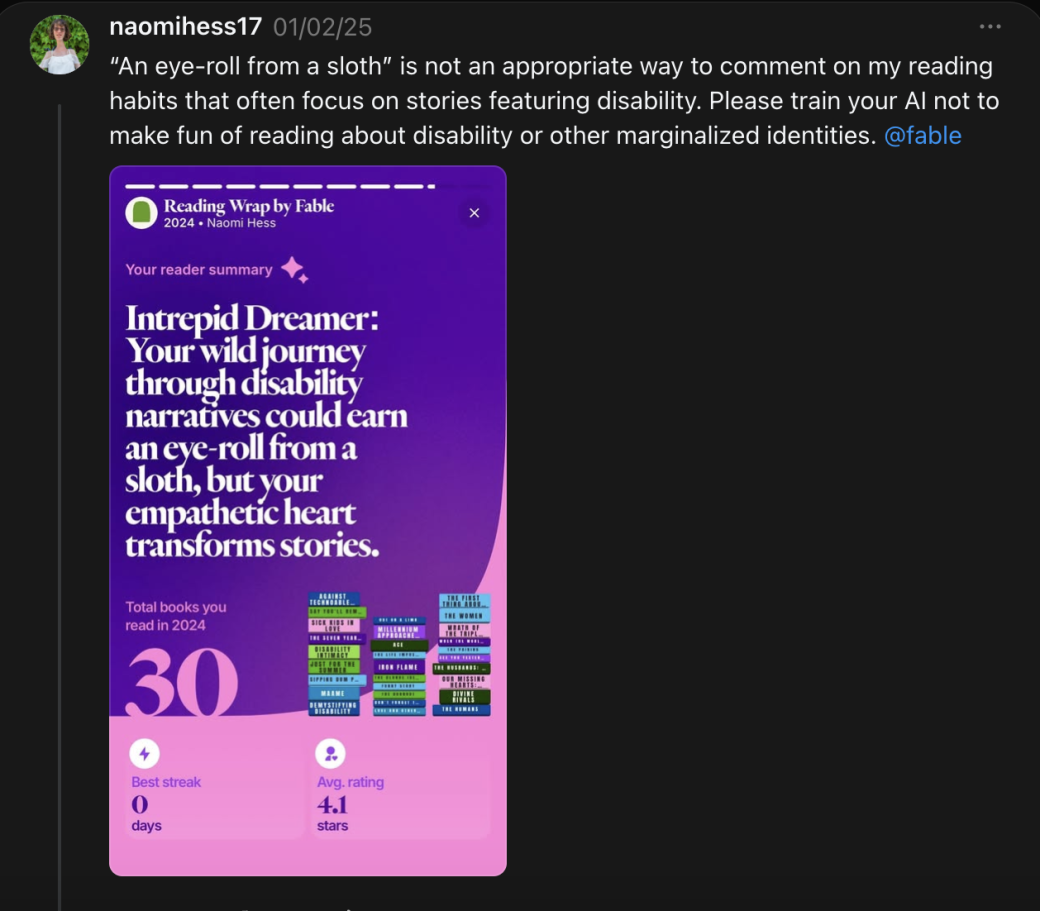
While Fable apologized for the content, they could have avoided the backlash by having humans review the AI summaries.
As more PR specialists experiment with AI, these ethical concerns will only grow more pressing. You can stay ahead of the curve by following guidance from the Public Relations Society of America and other organizations.
The evidence is clear: AI is part of the future of PR, but it’s not a replacement for human ingenuity. Organizations always need skilled PR professionals to create authentic, truly innovative content.
You don’t need to go all in right away. Start small by experimenting with AI tools in your day-to-day workflows. If you’re writing a press release, ask ChatGPT for an outline. Or use a tool like Sprout Social to see how customers talk about your brand online. As you gain confidence, you can branch out to more advanced tools.
Above all, trust your judgment. AI is meant to help, but we still need skilled PR professionals to tell quality stories.