
How to Choose a 3PL: 5 Mistakes E-Commerce Brands Make
Learn how to choose a 3PL that fits your channel mix, avoids hidden costs, and scales with your brand. Real selection criteria, and top providers compared.
Updated February 23, 2026

Buying the right vehicle is never easy, especially when it's for business and not personal use. Follow these steps to buy the right car for your company.
Updated 01/13/2023
Are you getting a car for your small business?
Looking for a BPO agency?
Compare our list of top BPO companies near you
Securing a company ride is a big-ticket item that can benefit you in more ways than one. There's been an increase in commercial car and truck fleets these past few years, leading to massive growth in the industry. The commercial is projected to be worth $990.5 billion by 2028 at this sustained growth rate.
You're going to be in good company if you decide to get a new set of wheels. However, when buying a new vehicle for your business, consider the fact that you're not only getting a car for yourself.
Like it or not, the car you end up with is a projection of your company. It doesn't matter what business you're in. You need a decent car that portrays the image you want your prospects and clients to see. Even if you have the best marketing strategy, showing up in a beat-up old car can turn off even the brightest of future customers.
A business vehicle or company car is a motorized vehicle (car, van, bus, boat, or other vehicles) registered by business owners and leaders solely for business use.
Here are a few business purposes that a company may use their vehicle for:
Operating with a business vehicle offers many perks to small business owners, entrepreneurs, and self-employed professionals.
All commercial vehicles must be registered with the associated company. It’s important to note that cars without documentation that details how they’re used will be considered personal vehicles by the IRS.
Consider what is most important when you are deciding how to make the best decision and reap the benefits of buying a company car:
Looking for help assessing your readiness for a company car? Connect with a financial services consultant on Clutch.
One of the first considerations you need to make is whether you can afford to buy and maintain a car. How much are you willing to spend on maintenance and fuel costs per year?
If your company is doing great, purchasing a vehicle won't be an issue, and you can incorporate it as a business cost. Keep in mind, however, that there are extra costs associated with purchasing a vehicle.
Each vehicle model is different, and there are registration and insurance fees plus repair and maintenance expenses to prepare for. If you're choosing between several models, estimate how much you'll spend on parts, fuel, and repairs. According to AAA, cars that are driven over 15,000 a year will cost an average of $8,469 to ensure and maintain.
The benefits of buying a company car are depreciation, tax deductions, and upfront costs.
Costs to consider when buying a business car:
While you can save some money on these expenses with deductions and write-offs, it’s important that you consider all the factors that will influences your actual expenses.
If you’re looking to save on buying a vehicle for your small business, it may be beneficial to look into a used car. Depending on your need and market fluctuations.
Sites such as Kelly Blue Book are excellent resources for any make and model. As a general rule, bigger and heavier vehicles have higher fuel and maintenance costs than smaller cars.
Once you set a budget and get the tax implications out of the way, it's time to choose a vehicle. The type of business you're in will decide what company car you need to buy. Do you need a non-descript vehicle that flies under the radar, or a fancy ride to impress your high-end clients?
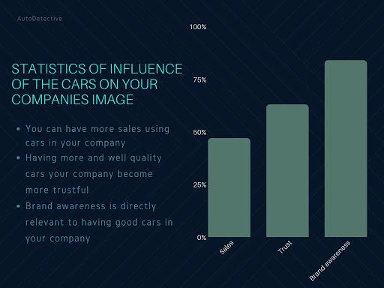
The car you choose has to make sense and fit your company's image. For instance, a mean-looking truck will feel right at home in a construction site, while an SUV or sedan is perfect for real estate.
Ask yourself 3 questions:
Are you buying a car that you'll also end up using for personal use? If this is the case, you have to think about what type of vehicle you need because it affects the amount that can be written-off on your taxes. Deductions are also dependent on who else uses the company car. If you're tracking mileage, buying a staff car makes more sense because you won't have to worry about mileage limits.
Are you buying a new car to impress your clients and project success, or is it more for practical reasons? Your business model affects what car you need. You can choose to get an SUV, a van, a truck, or a sedan. Save the sportscar for personal use.
You need to title the car in your business's name if you'll be writing it off as a business expense. You may not get a significant tax advantage if you title the vehicle in your name. Insurance coverage will also cost less if the car is under your company's name.
Overall, you should make sure that the car your small business invests in makes sense for your company’s image.
One of the benefits of buying a vehicle through your business is the tax advantages tied to it. The operating cost for every car registered to your company is deductible.
In the 2019 tax year, taxpayers were able to claim 58 cents every business mile driven using the company car. However, if you use the company car for personal use, you can only deduct costs related to business use. You'd need to do some calculating gymnastics for the numbers to line up.
Believe it or not, the most significant advantage of company vehicles is depreciation. The new tax laws state that if you use a car exclusively for business, you'll get substantial bonuses. If the vehicle has been in service between September 28, 2017, and December 31, 2026, you'll get a depreciation bonus.
Expect to earn:
The savings you can find when buying a car for your business can be significant.
Before searching for a new car for your business, speak with your accountant about write-offs and tax implications. These depend on the current deductions you're already taking, and your income. In some cases, purchasing a used vehicle makes more sense than getting a new one. If you're getting a new car, you can either make a loan or pay for it upfront. Even with stable company finances, you may want to consider financing the vehicle, especially when interest rates are low.

For instance, trading in your old company car will yield a lower reduction, while leasing can give you a tax advantage. You also have the option to forego financing the vehicle and pay cash for it outright for a deduction. Your accountant can answer any questions on whether writing off the entire transaction or deducting it in increments over time is better for your company. Please note that there are limits on these deductions if your gross income (adjusted) isn't substantial enough.
Remember, the interest you pay on a company car loan is a deductible tax expense, something to think about when choosing between a used and new vehicle. Dealerships also a lot of deals, rebates, and incentives.
The IRS allows companies to calculate their exact spend on business car use or a standard mileage rate.
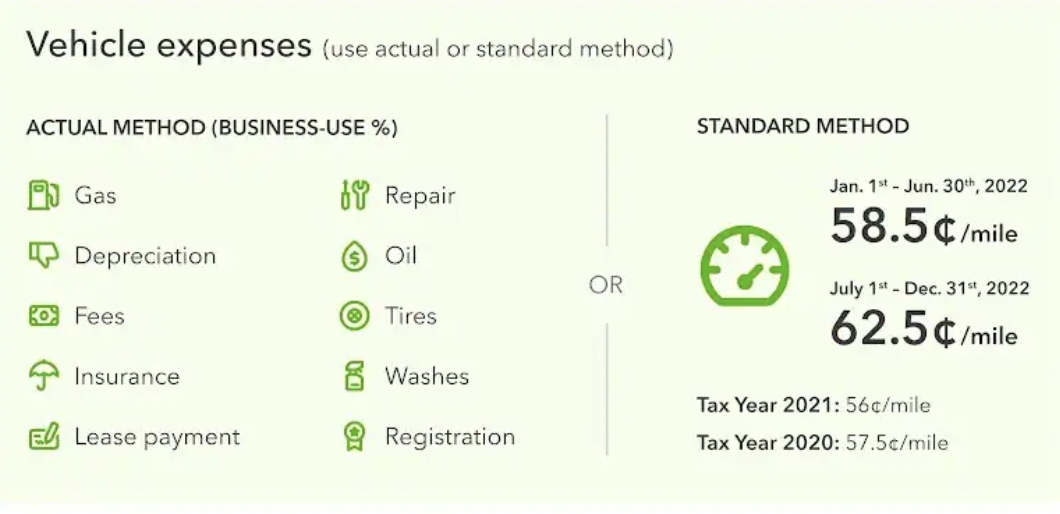
Source: Intuit
Speak with your accountant or financial services provider about whether it’s more advantageous to use either type of business tax for your unique situation.
The IRS allows higher write-offs for qualified heavy vehicles, such as SUVs. According to Section 179, you're eligible for a deduction of up to $25,000 if you use a "heavy" pickup, van, or SUV for your business 50% of the time. Please note that this deduction is only applicable to the first year you use the vehicle and if it meets IRS specifications. You can also claim a first-year depreciation bonus if your heavy vehicle is brand new when you start using it for your business.
There are also restrictions. Your deduction can't be more than your yearly total net taxable income. You also need to continue using the vehicle 50% of the time after the first five years of service to avoid paying back some of the tax deductions.
Still, heavy vehicles can provide the kind of tax benefits that will aid your business.
Buying a vehicle for your company is a recurring expense. Aside from the usual fuel and repair costs, you'd have to upgrade your ride every few years. Company cars eat up a lot of miles and get dinged up more than personal-use vehicles, especially if multiple people drive it.
You need to consider talking to an accountant about all the tax breaks you can get your hands on, to lower the impact of buying a vehicle has on your budget.
But, if you follow all the steps, your small business will own a vehicle to be proud of.
Need help reviewing your financing options? Connect with a financial services provider on Clutch.