Updated March 25, 2025
Change is challenging in any organization and requires assessment, strategy, testing, and monitoring. Change management services make change implementation cost-effective, timely, and smooth.
Change management services ensure transformational enterprise changes are well-planned and implemented with all stakeholders involved. These services provide expertise in handling the challenges of significant changes, such as digitization or a new business model. With professionals trained in change management, businesses are in better hands to reach their desired goals, regardless of the extent and nature of the change.
Change management services are typically helpful for sweeping changes or large organizational projects. For example, if an enterprise is merging with another, professional change management may help oversee the merger, ensuring it goes smoothly with minimum interruptions to business.
Browse Related Focus Areas
What Are Change Management Services?
Change Management: Change management services support businesses during transition phases. They can help them create plans, communicate, adopt new goals, business processes, or technologies.
Change management ensures the successful implementation of changes within a planned timeline and budget. It comprises strategies for controlling change so people can adapt and make the best of the transformation.
Several scenarios may call for change management hiring. For instance, change management may be necessary for digital transformation, wherein a business digitizes its process, adopts various tools, and embraces automation. Another scenario where change management can come in handy is a physical move, where a business may be moving to another location.
The application of change management could be limited to specific departments or teams or extended to the entire organization, depending on the particulars of the transition.
Change management involves several critical tasks aimed at successfully implementing organizational changes. These tasks include:
- Change assessment and planning
- Communication and stakeholder engagement
- Resistance management
- Training and development
- Performance measurement and evaluation
- Project management support
- Ongoing monitoring and adjustment
Change Management Services by Country
-
 United States
Change Management Services
2,527 Providers
-
 Canada
Change Management Services
331 Providers
-
 Australia
Change Management Services
161 Providers
-
 United Kingdom
Change Management Services
469 Providers
-
 India
India
Change Management Services
215 Providers
-
 Germany
Change Management Services
86 Providers
Change Management Services by City
-
 New York City
Change Management Services
425 Providers
-
 Los Angeles
Change Management Services
96 Providers
-
 Chicago
Change Management Services
75 Providers
-
 London
Change Management Services
253 Providers
-
 Sydney
Change Management Services
66 Providers
-
 Dubai
Dubai
Change Management Services
68 Providers
5 Benefits of Change Management Services
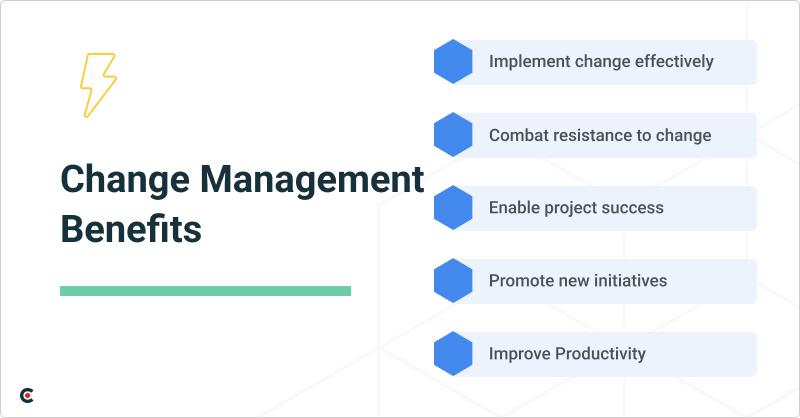
Change management is a science on its own. With any major organizational change, businesses are likely to face new and unexpected challenges. Change management services provide tools and strategies that can help clients avoid any pitfalls while helping them maximize the impact of new tools, processes, and policies that are implemented. Because of this, there are many benefits of change management:
- Create strategies for implementing change effectively: Change can be overwhelming and result in chaos if implemented without a strategy. Change management takes a strategic approach, accounting for challenges and mitigating risks.
- Proactively combat resistance to change: Change managers minimize friction between proposed changes and stakeholders (usually employees). With training and support, change managers help stakeholders openly embrace the new processes and technologies. They address any concerns about the changes, noting the feedback at every level.
- Enable the success of new projects: Change management ensures you implement departmental or organization-wide projects in a structured fashion and attain your desired goal. It also helps keep project delivery on time and within budget.
- Promote adoption of new initiatives: Businesses can modernize their processes and functions, embrace technologies, and boost productivity with major initiatives that change the current way. Change management makes it easier to move forward with such initiatives that help the business perform better and grow.
- Improve productivity: Changes in organizations may result in interruptions that, in turn, take a toll on productivity. Change management services strategize implementations in such a way that minimizes interruptions and keeps productivity high.
What Services Do Change Management Companies Provide?
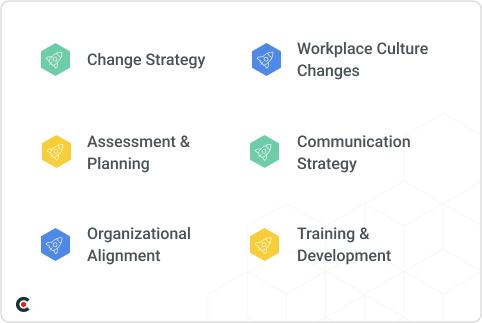
Change management services offer a variety of expertise for different types of changes in an organization. These changes may be developmental or completely transformational, depending on the niche of the business and its objective. Here are the typical services offered by change management specialists:
- Developing a change strategy
- Change assessment and planning
- Creating organizational alignment
- Workplace culture changes
- Communication strategy
Change managers use a mix of knowledge and tools to help businesses create change with the following primary services.
Developing a Change Strategy
Change management professionals develop a strategy to achieve the desired change while identifying challenges and risks. For instance, they might explore how a change will impact the organization's processes, systems, and stakeholders. They may also study how change will impact external stakeholders, like partners, suppliers, or customers.
The change management strategy provides a solid plan for implementing and testing the change with a well-defined schedule, resources, and budget. The strategy also provides a way to roll back changes if necessary.
Change management services ensure regulatory compliance for large, regulated organizations like those publicly listed or in the healthcare sector.
Change Assessment
Change management experts provide one of the most essential services: change assessment, where they analyze the proposed change's feasibility, scope, and purpose. For instance, if a business is moving to the cloud entirely, a change management service will assess how such a change will impact the industry.
During change assessment, these professionals also determine which change model will best suit the needs of the desired change. Change management models are the types of approaches an expert might recommend based on your needs.
For instance, ADKAR focuses on preparing employees. It communicates clearly what's about to happen and fosters buy-in from staff, helping to create a unified mission for the team. On the other hand, Kotter's 8-step model is about creating a sense of urgency, building a strong change team, and making sure the changes can be sustained. It’s ideal for significant transformations like mergers or new business ventures.
Prosci 3-Phase model is very straightforward with planning ahead, managing the transition, and establishing permanent change. McKinsey's 7S Framework is helpful if an organization is making a change that impacts all the parts of a business. It examines change in light of the organization's strategy, structure, systems, shared values, style, staff, and skills.
Creating Organizational Alignment
Change management services offer expertise to ensure changes fully align with business goals and values. More specifically, they help stakeholders get on board and readily embrace the changes. 22
With seminars, workshops, and training sessions, change management services ensure employees are educated on the change, whether using new systems, working with an acquired company, or following an updated policy.
Corporate Culture Change
Not all changes are technological or functional. Organizations may want to embrace a new workplace culture that promotes inclusivity, productivity, and growth. Change management professionals can also provide corporate culture change management.
This service involves education, awareness, and training to do things differently. For instance, a company may want to embrace a more laid-back culture with a distributed hierarchy and direct reporting. A professional change management service can acquaint employees with the new command structure. They'll provide them the tools to operate autonomously and collaborate with people instead of going through a specific chain of command.
Communication Strategy
Another service change management professionals provide is a communication strategy for communicating the change to various stakeholders. The stakeholders may be employees, vendors, or consumers who will be walked through the changes with compassion and care.
A change management expert will empower leadership to effectively communicate changes to stakeholders without creating negative perceptions.
For example, an enterprise branching into a different product line may use change management services to help with branding. They'll come up with clear ways to get the message to customers and employees that "We're branching out, not changing who we are as a company! Changes like this can generate new excitement when stakeholders clearly understand the why behind the changes and buy into them. Change management can help with this.
How to Assess Change Management Services
When hiring change management services, assess the success of their expertise in implementing change. Before they get into action, define relevant metrics to evaluate their performance.
Here are some relevant metrics:
- Training Test Comparative Results: Conduct tests or surveys before and after training of stakeholders on changes and assess if their knowledge, skills, or attitude has changed. This metric proves stakeholders' buy-in to changes, which is essential for successful change management.
- Communication Effectiveness: Evaluate how effective the communication strategy was about the change. Surveys or polls may assess how well stakeholders understand the need and benefits of changes and how comfortable they are with them.
- Performance Improvements: Measure performance-related metrics specific to your business to determine the success of change and its implementation. These metrics may even show the return on investment of working change management services.
- Business Change Readiness: Measure the readiness of teams, processes, and technologies to change. You can measure this through surveys and tests.
What is a Change Management Team?
Change management teams consist of diverse roles and skills that come together to strategize, implement, and test organizational changes. Each role has unique responsibilities essential to the operations of the change management service itself and the clients it caters to.
Here are the most common roles in change management teams:
- Change manager: Oversees the entire change process, ensuring alignment with organizational goals and effective implementation.
- Change consultant: Provides external expertise and guidance to organizations that are changing, often specializing in specific areas like communication or resistance management.
- HR consultant: Focuses on the human aspects of change, addressing employee concerns, providing training, and managing employee relations during the transition.
- IT professionals: Play a crucial role in technological changes, ensuring systems and processes are updated or refreshed while also ensuring any existing legacy systems are compatible with the new ones.
- Change specialists: Offer specialized knowledge and skills in specific areas of change management, such as process improvement, data analysis, or project management.
What to Look For When Hiring Change Management Services
Begin by evaluating your needs and understanding the nature, scale, and scope of the change you must implement. Choosing a service with expertise and experience in the kind of change you're going after is essential. For example, some companies specialize in technological transformations, while others may be more focused on inclusivity and diversity efforts.
Depending on the size of your enterprise and the requirements of your project, you may be making a significant investment by hiring change management services. To ensure you get a favorable return on your investment, do your due diligence before hiring a provider.
Not all change management services providers may suit your business profile or transition goals. Prioritize finding a provider with the necessary experience and skills to help with the specifics of the change (for example, merger or acquisition). Evaluate your options against set criteria to find the best services.
Criteria for Hiring a Change Management Company
Finding the right partner for change management is essential to ensure success. Here are the main criteria to consider for change management hiring:
- Expertise: Changes can be project, department, or technology-specific, requiring a unique set of skills and expertise to manage. Ensure your chosen provider is an expert in the change you plan to implement.
- Budget: Assess the budget for change implementation and designate part for change management services. Use this number to search for a provider.
- Location: Certain cases of change management may require the physical presence of personnel on-site. For such organizational changes, partner with a local service or one willing to travel to your premises.
- Technology: Good change management requires the use of tools for efficiency. Consider the tech stack of change management services.
- Team Size: Change management may even be handled by an individual, but large-scale changes may require support from a team. Assess the number of personnel the provider will dedicate to your business.
- Projects: Look at the past projects the provider has undertaken. Read about the projects and consider the metrics for success.
As always, it's best to read testimonials from other clients and see how the change management provider fared in past jobs. At Clutch, you'll find detailed reviews for businesses specializing in change management that will help you narrow down your choice and find the right fit.
10 Questions to Ask When Hiring a Change Management Services
When assessing different change management services, ask the following questions:
- How long have you been in operation, and do you have any specialty areas?
- What is your experience implementing similar changes to ours, particularly in our industry?
- What change management methodology do you follow, and how does it align with our organization's needs?
- Who will be involved in the change management project, and what are their specific areas of expertise?
- How will you ensure effective communication with all stakeholders throughout the change process?
- What strategies do you employ to address and manage resistance to change?
- How will you involve and engage key stakeholders in the change process?
- How will you measure the change initiative's success, and what metrics will you use?
- What training and development programs will you offer to support employees during the change?
- What is your estimated timeline for the project, and what is the associated budget?
Search for Change Management Services Based on Project Requirements
When looking for experts in change management, begin your search at Clutch. Write down your requirements and criteria to find the perfect fit for your organization's big change. Whether it's a single project or a transformational change to impact the entire enterprise, you'll find a selection of providers with expertise in effective change management. Use this guide to hire the best partner in change management.
Change management is a surefire way to ensure the intended change achieves the desired objectives. However, change management requires a specific set of expertise that only an organization trained in this particular field may provide.
Hiring change management services is a cost-effective way to navigate the challenges of implementing significant transformations or taking on major projects. Use Clutch to find the right services for your business and take advantage of the experts in their fields.